

×
GreekEnglish

×
  • Politics
  • Diaspora
  • World
  • Lifestyle
  • Travel
  • Culture
  • Sports
  • Cooking
Thursday
15
Jan 2026
weather symbol
Athens 12°C
  • Home
  • Politics
  • Economy
  • World
  • Diaspora
  • Lifestyle
  • Travel
  • Culture
  • Sports
  • Mediterranean Cooking
  • Weather
Contact follow Protothema:
Powered by Cloudevo
> World

Potent spider venom kills cancer cells, Greek-Australian scientist finds

Dr Maria Ikonomopoulou started her research in Queensland

Newsroom October 8 09:51

A peptide from an Australian funnel-web spider has been found to kill both human melanoma cells and cancerous Tasmania devil facial tumours that are threatening the survival of the species.
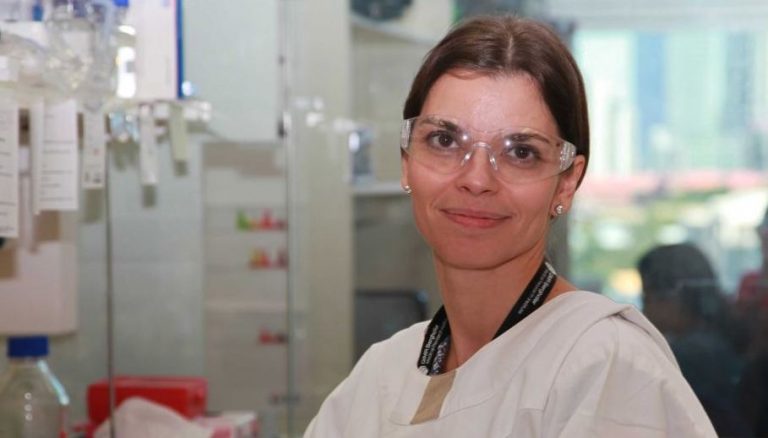
The breakthrough was led by research conducted by Greek-Australian medical scientist Maria Ikononopoulou, who started her research in Queensland before moving to Spain.
The research started at Brisbane’s QIMR Berghofer Medical Research Institute, also found that the funnel-web compound had almost no negative effects on surrounding healthy cells in either case.
Maria Ikonomopoulou who is now based in Spain conducting independent research, started her work at QIMR Berghofer before moving to Europe.
“We decided to test this spider [funnel-web] compound because it was very similar in chemical composition to a compound from a Brazilian spider, which was already known to have anti-cancer properties, although it had never been tested in devil facial tumour cells,” Dr Ikonomopoulou said.


Sydney funnel web spider

“When we tested the Australian spider peptide on human melanoma cells in the laboratory, it killed
the majority of them. We also found the peptide slowed the growth of melanomas in mice.
“We also found that the Australian funnel-web spider peptide was better at killing melanoma cancer cells and stopping them from spreading, than the Brazilian spider peptide.
“I have always been interested in the Tasmanian devil and had been trying to find a new drug to combat the facial disease, so I tested the funnel-web peptide and found it was really potent.
“Because it specifically kills the cancerous cells in the Tasmanian devil, it can be explored as a potential new drug that could be used to protect the species.

Dr Maria Ikonomopoulou

>Related articles

Agony for 11 families in Greece with children from the sperm of a Danish donor – The gaps in checks and the risks of IVF

A child in Greece born from the sperm of a Danish donor has died of cancer — the sibling is also ill

Seven clinics in Greece received sperm from the Danish donor carrying the cancer gene

“We’ve only done preliminary tests and we need to do more work on it, such as testing it on different types of cancer and tumours in the hope it can be put forward as a drug candidate.”

Dr Ikonomopoulou said the results were exciting and offered a significant platform for finding more drug compounds.
“The melanoma research is not groundbreaking on a global scale, but it is very interesting to find an Australian spider that has good potential to explore,” she said.
“The Tasmanian devil research is groundbreaking, I don’t think anyone has looked at peptides as a potential source for new drugs for the facial tumours before.”
The study was also led by fellow QIMR Berghofer researcher Manuel Fernandez-Rojo, along with collaborators from the Institute for Molecular Bioscience at the University of Queensland.

source: smh.com.au

Ask me anything

Explore related questions

#biology#cancer#Greek Australian doctor#medicine#research#spider#Sydney funnel web spider#timour
> More World

Follow en.protothema.gr on Google News and be the first to know all the news

See all the latest News from Greece and the World, the moment they happen, at en.protothema.gr

> Latest Stories

Thriller (again) in Munich: Bayern – Panathinaikos 77–74 (4th quarter)

January 15, 2026

“You think you are descendants of Plato and Aristotle, but you’re not” – Rama’s tirade against Greek journalist, watch video

January 15, 2026

“Aunt Pecu,” who lived outside all protocol: Who the unconventional and eccentric princess Irene was

January 15, 2026

High-tech fraud – SMS blaster attack: Bank data stolen using special equipment installed in a car’s trunk

January 15, 2026

Ballistic missile strike hits pier in Ukraine

January 15, 2026

Ursula von der Leyen from the Green Line: Pushing for a solution to the Cyprus issue is a priority

January 15, 2026

The ordeal of a 28-year-old Greek man in Australia: He went on holiday to visit relatives, was injured at a beach, and is at risk of quadriplegia

January 15, 2026

Princess Irene dies at the age of 83

January 15, 2026
All News

> Economy

Tourism: Greece, Athens, and Attica lead with over 4.75 billion euros in revenue by 2019—Doubling previous figures

The latest data from the studies of INSETE give the picture in the 13 regions of the country

January 15, 2026

Oil prices fall 3% after Trump’s statements on Iran

January 15, 2026

Pierrakakis: The new 10-year bond record is the most convincing answer to those who question the value of the investment grade

January 14, 2026

UBS: Greek banks in the spotlight – Piraeus Bank portfolio top pick

January 14, 2026

Austrian press on the Greek bond: Investors are now queuing up in Athens

January 14, 2026
Homepage
PERSONAL DATA PROTECTION POLICY COOKIES POLICY TERM OF USE
Powered by Cloudevo
Copyright © 2026 Πρώτο Θέμα