





The U.S. State Department wants to expand a little-known effort that offers countries cash to buy American-made weapons if they give up Russian-made arms.
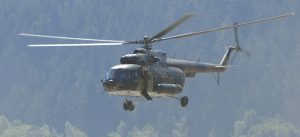
The year-old initiative, called the European Recapitalization Incentive Program, is already helping six eastern European countries buy new helicopters or armored vehicles. Now, State Department officials are looking to take the effort global to get allies and partners to abandon not only Russian weapons, but Chinese ones too.
“The goal is to help our partners break away from the Russian supply chain [and] logistics chain that allows Russian contractors and service personnel and Russian-manufactured spare parts onto either NATO allied bases or partner military bases,” a State Department official said this week.
The effort comes at a time as military officials across the Potomac River at the Pentagon talk about great power competition between the U.S. and Russia and China.
To get the money, countries must get rid of their Russian weapons, promise not to buy new ones, and commit some of their own funding to buying American.
“It’s meant to incentivize partners and allies to put in their own funds to modernize their military and divest Russian legacy equipment,” the State Department official said. “The idea being, we can put in some U.S. grant military assistance. They would then put in some amount of partner military [funding].”
The idea is to start the foreign country toward buying a substantial number of whatever weapons are needed.
“We’re going to build at least an initial amount,” the official said. “We’re not just going to buy them one helicopter or two infantry fighting vehicles.”
The American cash flows through a Foreign Military Financing account.
“We’re not using U.S. taxpayer money to completely buy this for a partner,” the official said. “This is going in with our partner together to build an overarching capability.”
The countries already approved for funding have militaries that use Soviet-era helicopters and infantry fighting vehicles, according to the International Institute of Strategic Studies’ Military Balance.
In some cases, if a country buys parts for these vehicles and helicopters, they could face U.S. sanctions.
Since the program began about a year ago, the State Department has pledged $190 million for six projects in six countries. The countries are in different stages of buying the new equipment and State Department officials believe it could take a few years until the partner nations are able to move ahead with the purchases. The countries include:
- Albania, $30 million for helicopters
- Bosnia, $30.6 million for helicopters
- Croatia, $25 million for infantry fighting vehicles
- Greece, $25 million for infantry fighting vehicles
- North Macedonia, $30 million for infantry fighting vehicles
- Slovakia, $50 million for helicopters
The North Macedonian government touted the effort as “strengthening the capacities” of its army by improving its equipment and bringing it in line with NATO standards.
State is looking at a second round of initiatives with potential for $50 to $100 million for new projects, the official said.
Even though the effort is still considered in a pilot or test phase, the State Department’s fiscal 2020 budget proposal calls for expanding the effort. U.S. officials are also looking at how to expand the initiative beyond Eastern Europe “to compete against Russia and China and help our partners get away or stay away from Russian or Chinese equipment.”
While State has not yet identified countries outside of Europe, it’s exploring countries in Central Asia, Southeast Asia and Africa.
Source: defenseone
Ask me anything
Explore related questions


