

×
GreekEnglish

×
  • Politics
  • Diaspora
  • World
  • Lifestyle
  • Travel
  • Culture
  • Sports
  • Cooking
Tuesday
13
Jan 2026
weather symbol
Athens 9°C
  • Home
  • Politics
  • Economy
  • World
  • Diaspora
  • Lifestyle
  • Travel
  • Culture
  • Sports
  • Mediterranean Cooking
  • Weather
Contact follow Protothema:
Powered by Cloudevo
> Culture

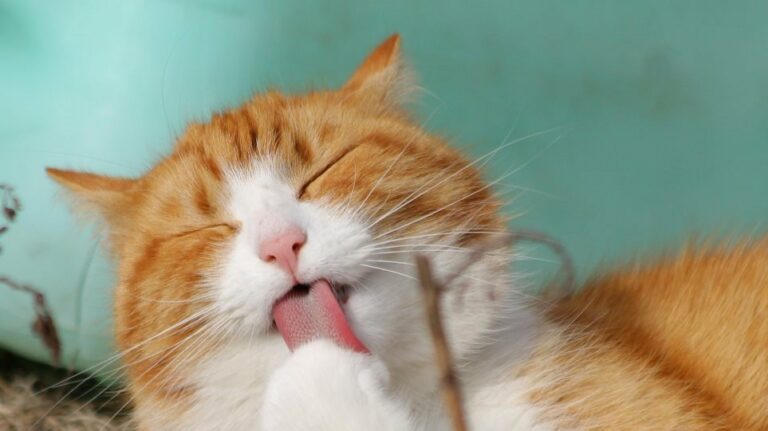
Why were the ancient Egyptians obsessed with cats?

Feline qualities were apparently next to godliness

Newsroom April 21 09:47

The ancient Egyptians are famed for their fondness of all things feline. There’s no shortage of cat-themed artifacts — from larger-than-life statues to intricate jewelry — that have survived the millennia since the pharaohs ruled the Nile. The ancient Egyptians mummified countless cats, and even created the world’s first known pet cemetery, a nearly 2,000-year-old burial ground that largely holds cats wearing remarkable iron and beaded collars.

But why were cats so highly valued in ancient Egypt? Why, according to the ancient Greek historian Herodotus, would the Egyptians shave their eyebrows as a mark of respect when mourning the loss of a family cat?

Much of this reverence is because the ancient Egyptians thought their gods and rulers had cat-like qualities, according to a 2018 exhibition on the importance of cats in ancient Egypt held at the Smithsonian National Museum of Asian Art in Washington, D.C. Specifically, cats were seen as possessing a duality of desirable temperaments — on the one hand they can be protective, loyal and nurturing, but on the other they can be pugnacious, independent and fierce.

See Also:

Stampede occurs during free potato distribution in southeastern Turkey (video)

>Related articles

Tuesday the 13th: Why everyone thinks it’s bad luck

South Korea prosecutors seek death penalty for former President Yoon Suk Yeol

Parliamentary elections set for April 12 in Hungary as Orbán appears weakened in polls

Indonesian submarine goes missing north of Bali

To the ancient Egyptians, this made cats seem like special creatures worthy of attention, and that might explain why they built feline-esque statues. The Great Sphinx of Giza, a 240-foot-long (73 meters) monument that has the face of a man and the body of a lion, is perhaps the most famous example of such a monument, although in truth, historians aren’t exactly sure why the Egyptians went to the trouble of carving the sphinx. Likewise, the powerful goddess, Sakhmet (also spelled Sekhmet), was depicted as having the head of a lion on the body of a woman. She was known as a protective deity, particularly during moments of transition, including dawn and dusk. Another goddess, Bastet, was often represented as a lion or a cat, and the ancient Egyptians believed that cats sacred to her.

Read more: Live Science

Ask me anything

Explore related questions

#ancient egypt#Ancient Greeks#archaeology#cats#culture#feline#Herodotus#history#world
> More Culture

Follow en.protothema.gr on Google News and be the first to know all the news

See all the latest News from Greece and the World, the moment they happen, at en.protothema.gr

> Latest Stories

What farmers gained from the meeting with Mitsotakis: The package for electricity, fuel, and income support – The message to the “hardliners” at the roadblocks

January 13, 2026

“Digital noise” from outdated technology caused chaos in the Athens FIR – What the committee’s findings say

January 13, 2026

JPMorgan: Greece one of the most attractive markets for the Emerging Europe category

January 13, 2026

Kimon arrives at Faliro as Europe’s heavily armed frigate enters Greek waters

January 13, 2026

ELSTAT: Inflation up to 2.6% in December

January 13, 2026

Spain aims to control deepfakes created with AI

January 13, 2026

Le Pen’s party’s appeal to decide her presidential future begins

January 13, 2026

Pyrgos: man attacked his wife with a knife and then threatened to kill himself

January 13, 2026
All News

> Greece

“Digital noise” from outdated technology caused chaos in the Athens FIR – What the committee’s findings say

According to the report, the existing Voice Communications system of the Hellenic Civil Aviation Authority (HCAA) and the critical telecommunications infrastructure supporting it are based on outdated technology that is no longer supported by the manufacturer – Criticism over cooperation between the HCAA and OTE

January 13, 2026

Kimon arrives at Faliro as Europe’s heavily armed frigate enters Greek waters

January 13, 2026

Pyrgos: man attacked his wife with a knife and then threatened to kill himself

January 13, 2026

The Cypriot stewardess who did not board the fatal Falcon with the Libyan general was released by the Turkish authorities

January 13, 2026

Marasleio students presented innovative business ideas to Sophia Zacharaki

January 13, 2026
Homepage
PERSONAL DATA PROTECTION POLICY COOKIES POLICY TERM OF USE
Powered by Cloudevo
Copyright © 2026 Πρώτο Θέμα