





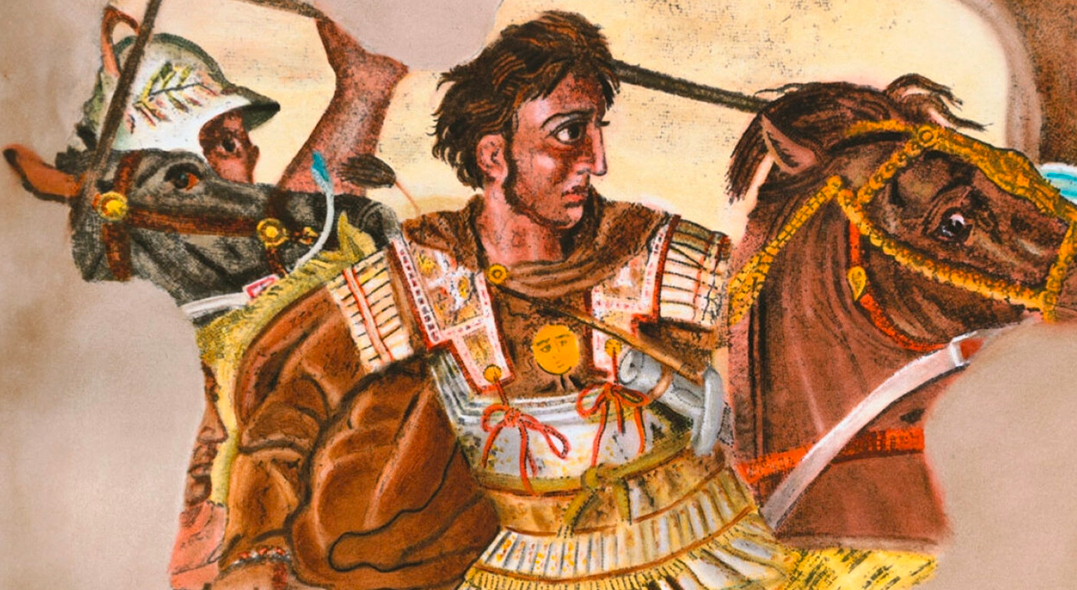
It has been 47 years since Manolis Andronikos discovered the tomb of King Philip II in Vergina, yet research, hypotheses, and conspiracy theories regarding the inhabitants of the impressive burial complex—and its possible connection to Alexander the Great—continue to flourish.
Recently, a new chapter has been added to this globally significant archaeological “series,” claiming the identification of Alexander the Great’s tunic from material found inside Philip II’s tomb. This discovery allegedly hints that the tomb might belong to Alexander’s half-brother, Philip III Arrhidaeus.
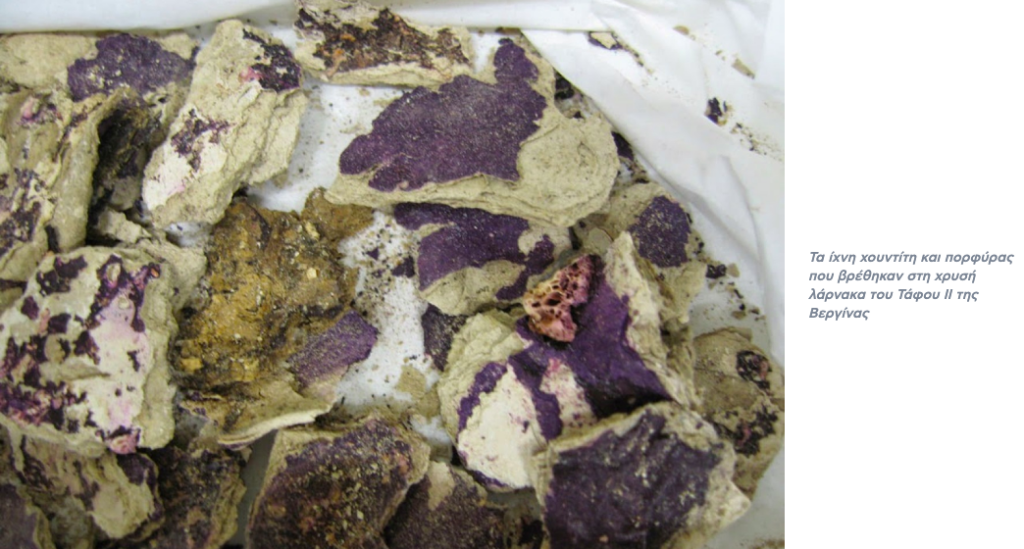
These findings come from a report by a team of archaeologists led by Antonios Bartsiokas, emeritus professor at Democritus University of Thrace, published in the Journal of Field Archaeology. Although the report sparked a social media frenzy a few days after its release, it lacks definitive proof to substantiate such a claim.
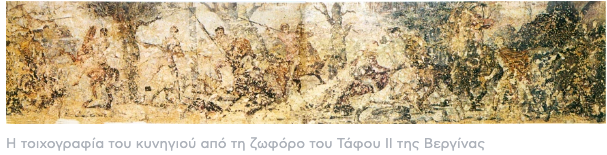
Bartsiokas’ theory, as outlined in the published report, is based on the analysis of textile material found inside the golden casket of Tomb II, also known as the Great Tumulus, alongside the famous golden oak wreath. The fabric in question was determined to be cotton and dyed purple, and among its layers, traces of huntite were discovered—a rare and expensive mineral used in royal garments in ancient Persia, where it was known as “sarapis.” These elements led the research team to speculate that the fabric could be part of a royal garment brought by Alexander from Persia to Vergina. As supporting evidence, Bartsiokas’ team points to a depiction in a mural from the tomb’s frieze, where one of the hunters, identified as Alexander, is shown wearing a similar purple tunic.
In essence, this theory challenges Andronikos’ groundbreaking discovery, subtly suggesting that Tomb II might not house Philip II, but Philip III Arrhidaeus, Alexander’s successor—a hypothesis previously proposed. It also implies that the items found inside the marble sarcophagus, such as grave goods, may have belonged to Alexander himself.
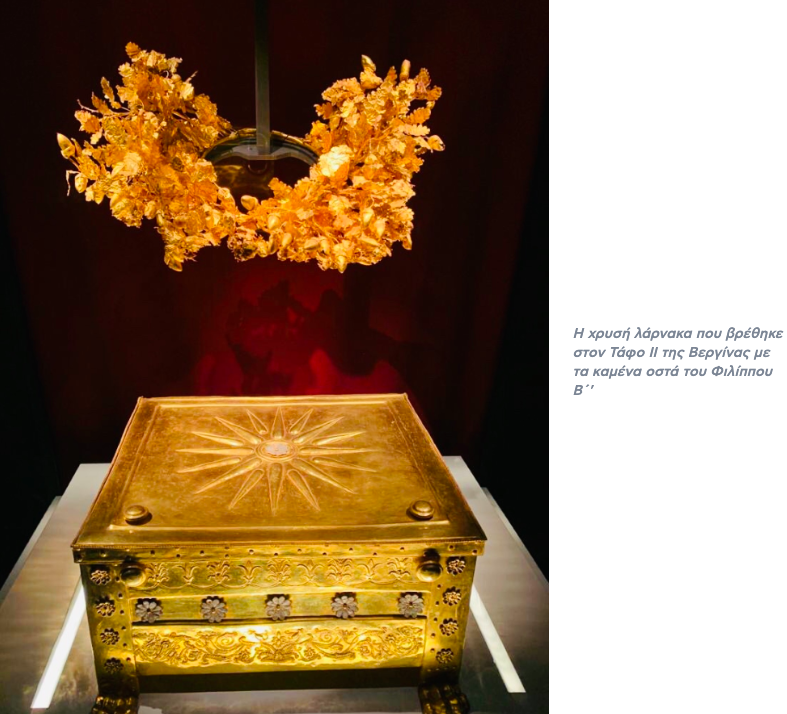
So far, officials have not made any formal statements about the matter. However, sources from the Ministry of Culture and the Vergina excavation team indicate that there is no confirmed evidence to support these claims. “In recent years, many theories about the Vergina tombs have circulated without considering excavation data. There’s fertile ground for speculation, but such discussions are baseless,” stated Professor Stella Drougou, emeritus professor of Classical Archaeology at the Aristotle University of Thessaloniki, who led the Vergina excavation for ten years following Andronikos’ death. She also noted that she had not been informed of the Bartsiokas team’s research by any official source and questioned how the team accessed the tomb’s findings.
Different Interpretations of the Fabric
The data supporting the new theory are not entirely new. Initially, the remnants found in Tomb II were believed to be part of a fabric wrapping the bones of the deceased before cremation. In 2014, the interdisciplinary team from the Vergina excavation presented at the Archaeological Museum of Thessaloniki, announcing the discovery of huntite and purple traces in the golden casket from Tomb II, found among and atop the bones, as seen in photos next to the golden wreath. This led to the conclusion that the fabric was part of a mask worn by Philip II during religious ceremonies, which was placed on his body as a sign of honor.
“It was a complex, multi-layered construction, featuring fabric made from 6-7 layers of materials, including huntite and purple. Philip likely wore it during religious ceremonies, possibly as a high priest of the Orphic Mysteries. It was a personal, sacred object that accompanied the deceased and was cremated with him,” explained Yiannis Maniatis, Director of Research and head of the Archaeometry Laboratory at Democritus University, who conducted the material analysis.
During the same event, new findings related to the skeletal remains in the tomb were also presented, confirming that the individual in Tomb II was indeed Philip II.
Ask me anything
Explore related questions


