





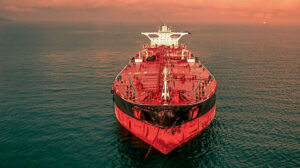
A few days ago, the massive tanker Atila, weighing 301,000 tons and flying the flag of Cameroon, was sailing with its GPS signal on, between the coasts of Mauritania and Cape Verde.
Just hours earlier, KPLER, the parent company of the well-known MarineTraffic platform specializing in oil industry analytics, had “caught” the Atila a bit farther north, off the coast of West Africa, transferring oil from two smaller tankers, the 159,000-ton Sakaraya and the 158,000-ton Cankiri. In such cases, GPS devices are typically turned off, but satellites can “see” the activity of the shadow fleet.
According to MarineTraffic, the Atila’s destination is Cape Town, South Africa, one of the best customers for Russian oil, particularly after sanctions were imposed following Putin’s invasion of Ukraine.
The Greek Aspect of the Russian Oil “Game”
It was, however, the “Greek” aspect of this grand game involving Russian oil that prompted the European Parliament last week to adopt a resolution demanding the effective enforcement of sanctions against Russia by member states.
This resolution followed revelations from major US media outlets like Bloomberg and CNN about the “Eldorado” of Russian black gold in the Gulf of Laconia. Using photographic evidence, these outlets exposed the operation set up in international waters 6 nautical miles off the Greek coast, where tankers belonging to the so-called shadow fleet transfer Russian oil, bypassing the international sanctions imposed on Russia.
A photo published by Bloomberg shows two tankers in the process of transferring Russian oil in the international waters of the Gulf of Laconia.
“Incredibly Profitable”
According to shipping industry executives, the profits from circumventing sanctions on Russia are enormous, given the substantial sums involved in trading the cargo of even a single tanker. “It’s incredibly lucrative,” they note. “The temptation for traders and everyone involved in this supply chain is immense. They can make $10–40 million in just four to five months. There’s no other opportunity in the world that compares to this.”
Estimates from the Ukrainian think tank KSE indicate that the volume of Russian oil transported by these tankers has steadily increased over the past two years, reaching 4.1 million barrels per day in June 2024. This represents 70% of Russia’s total seaborne oil exports.
Meanwhile, the shadow fleet of tankers continues to grow its presence in international waters. Between January and August 2024, Europe recorded a 277% increase in shadow fleet tankers passing through the Danish straits compared to the same period in 2022. Similar increases were observed in the Strait of Dover and the Strait of Gibraltar, which saw a 355% rise, while the Suez Canal experienced a staggering 649% increase during the same period. Significant growth in shadow fleet activity was also reported in the Korean straits and the Strait of Malacca in Malaysia.
A Parallel Universe
By June 2024, 70% of Russia’s seaborne oil was being transported by the shadow fleet, a network estimated to have cost Russia $10 billion to assemble, according to KSE. This fleet carried 89% of Russia’s crude oil shipments, most of which traded above the $60 per barrel price cap imposed since mid-2023, and 38% of Russia’s petroleum product shipments.
Shipping broker BRS Shipbrokers divides the shadow fleet into four categories:
- Sanctioned vessels flying Russian or Iranian flags.
- Privately owned, older vessels that are sanctioned and primarily transport Iranian oil to China.
- Ships purchased specifically to carry Russian oil.
- Ships owned by newly established shipping companies that emerged after the initial sanctions, engaging in both Russian oil trade and traditional commercial routes.
Over time, the issue of the shadow fleet has taken on nearly metaphysical dimensions. At a recent Capital Link Maritime Forum in New York, high-ranking shipping executives described a “whole new world” in maritime operations. Their findings were startling:
“The global trade landscape has split, with sanctions and tariffs escalating, and a growing global fleet ignoring Western sanctions. There appear to be parallel universes, parallel shipping industries, where both sides believe they are right and need not apologize for operating with greater independence,” explained Mark O’Neil, CEO of Columbia Ship Management.
“We have a full parallel universe—a parallel shipping industry—choosing which rules to follow and which to break. The term ‘shadow fleet’ no longer suffices,” O’Neil added, likening the situation to a world where drivers ignore traffic laws, drive uninsured, and flout speed limits with impunity.
Sanctions and Risks
European lawmakers are urging the European Commission to classify Russia as a high-risk country for “money laundering” and “terrorism financing.” This would compel banks and financial institutions to conduct additional checks when dealing with Russian entities. Measures also include more targeted sanctions, such as identifying individual shadow fleet vessels, their owners, managers, accounts, banks, and insurers.
The European Parliament is pushing for Western ships to be banned from transporting Russian oil and for penalties on vessels passing through EU waters without valid insurance to protect European waters and avoid cleanup costs from oil spills.
There’s also a call to intensify satellite and drone surveillance of shadow fleet activities and prohibit ship-to-ship transfers—a common practice among these vessels.
An Environmental Disaster Waiting to Happen
Experts warn that the shadow fleet poses a significant threat to maritime safety. Operating without sufficient or any liability insurance (P&I), these ships transport massive quantities of crude oil through congested routes, often with their Automatic Identification System (AIS) turned off to hide their locations.
With the shadow fleet’s numbers growing, the risk of a catastrophic ecological disaster and a billion-dollar cleanup bill looms large. Since the invasion of Ukraine, shadow fleet tankers have been involved in 50 incidents ranging from Denmark to Malaysia.
According to CREA, cleaning up an oil spill from a typical shadow fleet tanker could cost between $859 million in Europe to $1.6 billion in Southeast Asia.
Despite this, Russia’s revenues from fossil fuel exports continue to decline. In September 2024, they fell by 2%, marking the sixth consecutive month of decline, while liquefied natural gas export revenues increased by 4% month-over-month.
Ask me anything
Explore related questions