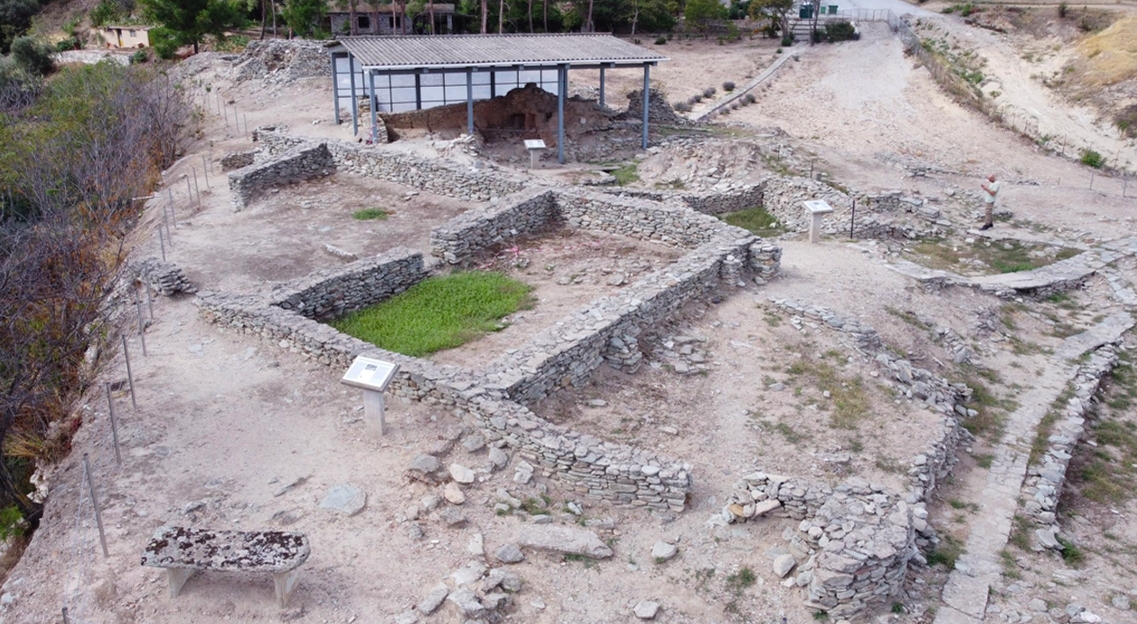
The Ministry of Culture is proceeding with the comprehensive protection and enhancement of the prehistoric settlement of Sesklo A and B in Aisonia, Magnesia.
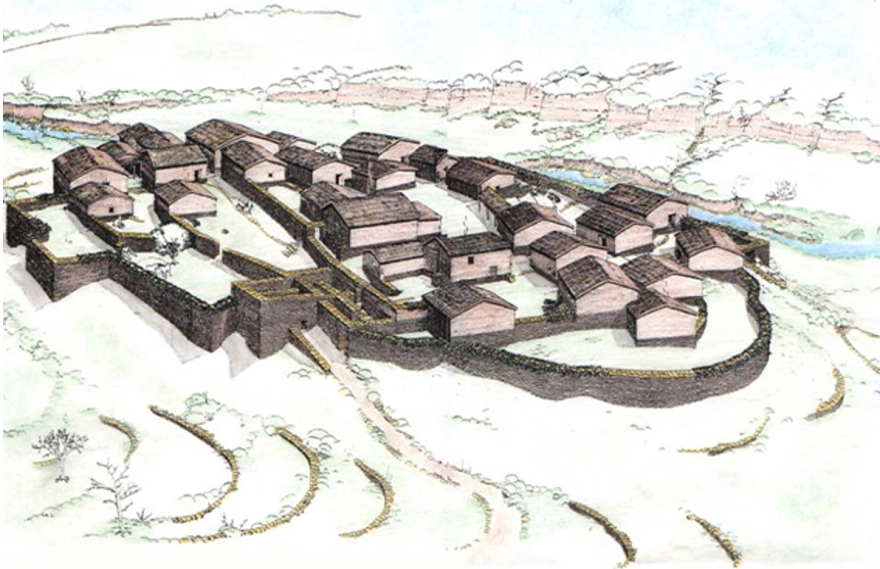
The plan includes proposals for the overall promotion of the archaeological site through stabilization interventions of the ancient remains, accessibility improvements, visitor management, and flood protection works for this highly significant site. The settlement of Sesklo has sustained damage from both the 2023 wildfire and storm Daniel. The protective and restoration works addressing climate change phenomena are funded by a sponsorship from the Union of Greek Shipowners to the Ministry of Culture, aimed at restoring monuments affected by Daniel, with a total budget of €10,000,000.
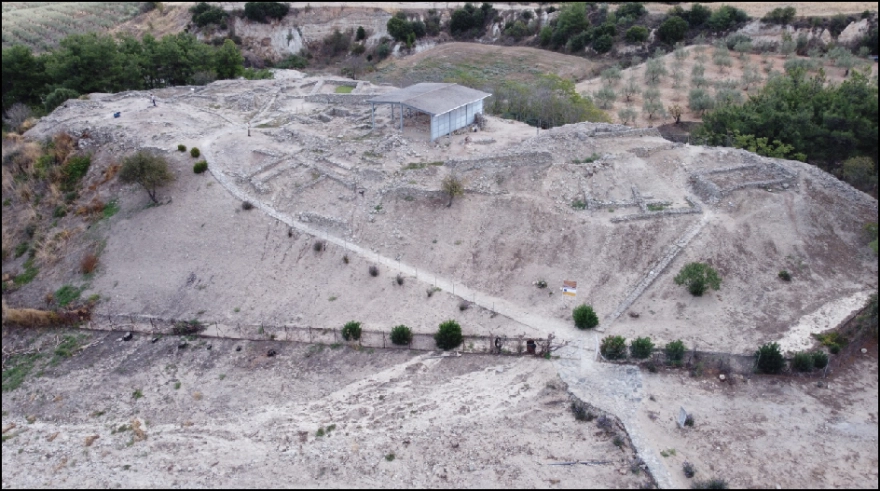
Minister Lina Mendoni’s Statement
Minister of Culture Lina Mendoni stated:
“The archaeological site of Sesklo, in Thessaly, is one of the most important and oldest Neolithic settlements in Greece and Europe. It developed on the Kastraki hill and the surrounding area, near the present-day village of Sesklo, and dates back to the Early Neolithic Period (7th millennium BC) until the Middle Bronze Age (2nd millennium BC), with its peak during the 5th millennium BC in the Middle Neolithic period.
This period corresponds to the so-called ‘Sesklo culture,’ during which significant advancements were made in pottery firing techniques and painted decoration. As the earliest known example in Greece where the architecture of buildings and settlement organization can be identified, Sesklo holds a crucial place in the evolution of architecture. The preservation of the impressive Megaron and sections of the enclosures, which form the core of the architectural remains from the Late Neolithic period, offers a unique example of the development of settlements and architecture of the era.
Protecting the archaeological site, particularly the walls and foundations of Sesklo A and B, is a complex and multifaceted task due to the significance of the findings, the vulnerability of the architectural remains, and the instability of the hill covering the ancient ruins. Although previous conservation efforts have been carried out, more than twenty years have passed since the last interventions. With the additional damage caused by the 2023 fire and floods, significant problems have been identified concerning the preservation of the architectural remains and the site’s readability.
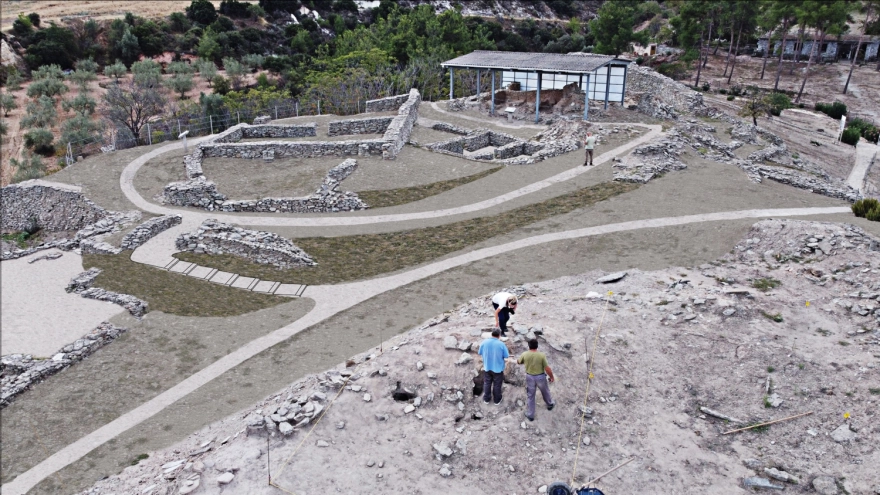
Our goal is to manage these issues as comprehensively as possible, improving accessibility and readability of the prehistoric settlement, which has seen steadily increasing visitor numbers in recent years. The main challenges in the archaeological site relate to the structural integrity of some walls, foundation erosion, lack of clarity in the spatial layout and construction phases, modern schist constructions that are mistaken for ancient structures, soil erosion, and rainwater management.
I thank the Union of Greek Shipowners, President Melina Travlou, and the Board of Directors for their support in restoring the monuments affected by the devastating 2023 floods.”
Study Proposals
The architectural study for the stabilization, restoration, and enhancement of the architectural remains of the prehistoric settlement of Sesklo A and B played a coordinating role among all studies, aiming to provide solutions for the protection and restoration of the structures while promoting the site through mild interventions that respect its character. These measures seek to improve the site’s visibility and visitor experience.
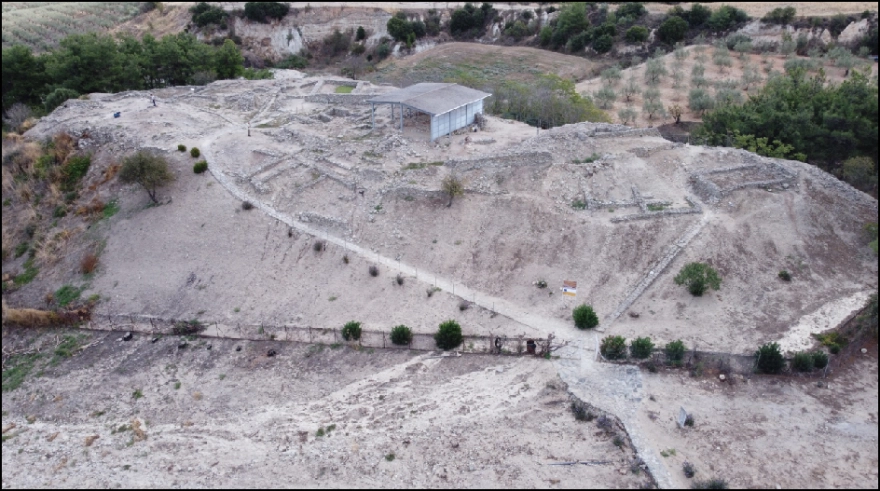
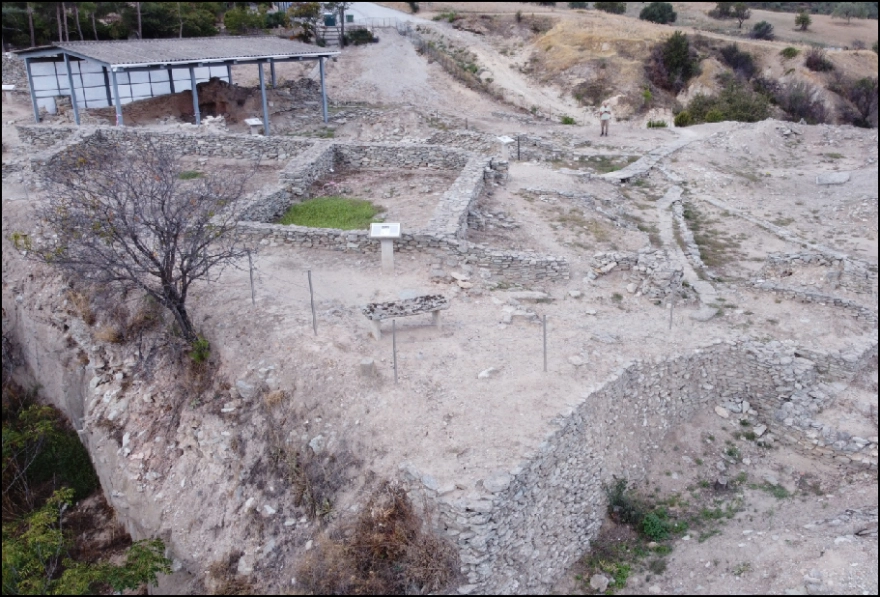
The organizational plan for Sesklo A focuses on maintaining the existing visitor route, which is dictated by the geomorphology of the site and its remains. To make the site more comprehensible to visitors, two distinct areas will be shaped: one for the Megaron and one for the group of dwellings, allowing visitors to grasp a characteristic image of this unique settlement representing the ‘Sesklo culture’ period.
At the Acropolis, the plan proposes removing 1970s and 1980s schist constructions that are often confused with the original structures. A new touring path will be designed to allow wheelchair accessibility, following the same route as the existing one. Along the southern side, a trench will be constructed for rainwater drainage. The current ascent route southwest of the Acropolis will be discontinued.
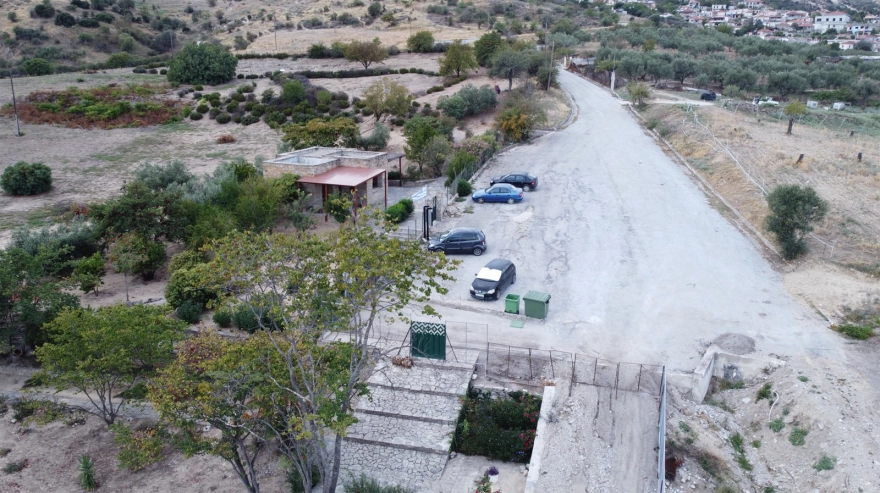
Additionally, maintenance work will be carried out on existing buildings (entrance, offices, and storage facilities). Outside the main entrance, adjustments will be made to the road’s slope and water drainage.
Based on the conclusions of the static study on stabilization, restoration, and enhancement of the architectural remains, the existing retaining wall will be extended, the hill at the southern landslide site will be restored, and structural foundations will be reinforced. The drainage study for surface water management includes measures to protect the archaeological site from flood runoff, manage surface runoff in the prehistoric settlement remains, and other key areas.
A specialized landscaping study is also being initiated, focusing on managing the site’s natural vegetation. This study will promote plant species that prevent surface erosion while highlighting the remains and incorporating appropriate ornamental vegetation for functional purposes, such as shading, pathway definition, and boundary marking.
Archaeological Site Overview
The archaeological site, covering approximately 40 hectares, includes architectural remains on Kastraki Hill, the Acropolis (Sesklo A), and Sesklo B on the slope. These remains primarily consist of densely arranged houses built with stone foundations, mudbrick superstructures, wooden beams, and chimneys.
The settlement underwent multiple phases of occupation (Sesklo C, D, and E). It was destroyed by fire at the end of the 5th millennium BC but was re-inhabited during the Late Neolithic period, albeit only on Kastraki. During this time, a ‘Megaron’ was constructed at the highest point, forming the central part of the new settlement and surrounded by circular stone enclosures. The settlement continued to be occupied until the Early and Middle Bronze Age.
Ask me anything
Explore related questions