




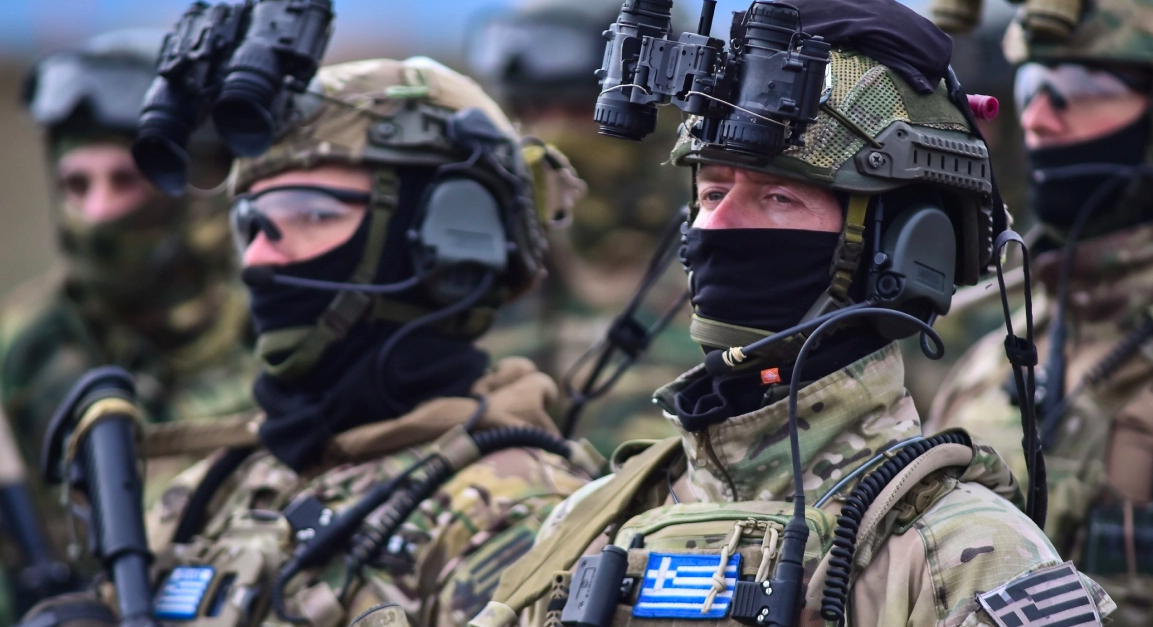
Greece is set to benefit from a fiscal relief measure as the European Commission’s new “escape clause” for defense spending comes into play. The clause will allow Greece to free up €3.6 billion for defense, including investments and the recruitment and training of military personnel.
By the end of April, each EU member state wishing to activate this new defense spending escape clause must submit a request to the European Commission. The Commission will then review these requests and issue recommendations in June, with the final decision to be made by the EU Council in July, following intense consultations.
This escape clause, which will be in effect from 2025 to 2028 (with a potential extension to be evaluated after 2028), offers member states greater fiscal flexibility to increase defense spending without breaching the strict rules of the Stability and Growth Pact.
According to government sources, this clause will be a positive development for Greece, which has historically allocated a larger percentage of its GDP to defense compared to other European countries due to its geopolitical position. In 2022, Greece’s defense spending stood at 2.6% of GDP, consistently exceeding NATO’s target of at least 2% of GDP, while the EU average was just 1.3% of GDP. The flexibility granted by the escape clause will cover both investments and current defense-related expenditures, enabling Greece to recruit and train military personnel (soldiers, officers, cyber defense). There is also room for the inclusion of military salary increases within the additional defense expenditures.
The new escape clause, also referred to as the “White Paper,” allows EU member states to increase public spending in critical areas, such as defense, without violating EU fiscal rules. This measure is designed to enable governments to spend more on military capabilities without these expenses counting towards their designated fiscal targets. The initiative is part of the broader EU effort to increase its defense autonomy and reduce dependence on third-party countries.
The maximum fiscal flexibility allowed for each member state is 1.5% of GDP per year. Additional defense spending will be compared to 2021, the year before Russia’s invasion of Ukraine. Countries that have already increased their defense spending since 2021 will be able to count these increases as part of the escape clause.
This flexibility applies to both investments and current defense-related expenditures. Specifically, it covers:
- Purchases of military equipment (ships, aircraft, tanks, weapons, anti-aircraft defense systems)
- Construction and upgrading of military infrastructure (military bases, weapon storage, communication networks)
- Recruitment and training of military personnel (soldiers, officers, cyber defense)
- Research and development in defense (new technology, AI, drones)
As a condition, member states are encouraged to source equipment from European companies to boost the competitiveness of the European defense industry.
Once the escape clause expires, countries will need to continue financing their defense expenses through their annual budgets. If military equipment orders signed before 2028 are delivered later, they can still be covered by the escape clause, provided they stay within the 1.5% GDP limit. The EU will review the situation in 2028 and may extend the flexibility if geopolitical circumstances warrant it.
EU officials highlight that Germany is also expected to benefit significantly. As the largest economy in the EU, Germany’s GDP is approximately 50% larger than France’s and twice as large as Italy’s. Additionally, it is the only major European economy not heavily in debt, with its debt standing at around 62.5% of GDP. By removing the constitutional “debt brake” for infrastructure and defense spending, Germany plans to implement a massive €500 billion program for infrastructure, as well as a comparable amount for defense. This could indirectly benefit German companies.
In contrast, countries struggling with deficits, such as France, Italy, Spain, and Belgium, may approach the escape clause with more caution. For example, just recently, the international rating agency DBRS downgraded France’s credit outlook, citing the upcoming increase in military spending.
Ask me anything
Explore related questions