What if you were told that for just 100 euros, you could own an authentic Picasso? For most people, that sounds almost too good to be true. Art at that level usually belongs in museums, private collections, or auction houses with prices far beyond the average person’s reach. Yet, a charitable initiative hosted by Christie’s is aiming to change that — at least for one lucky winner.
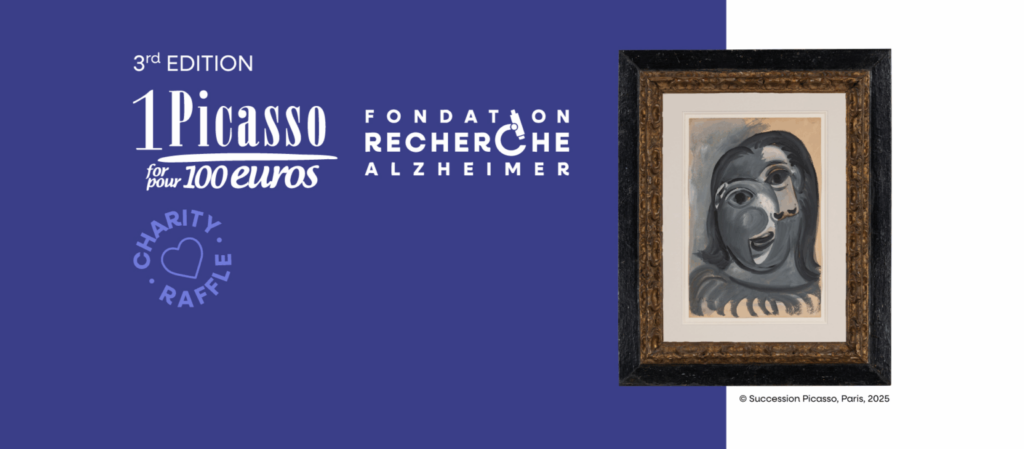
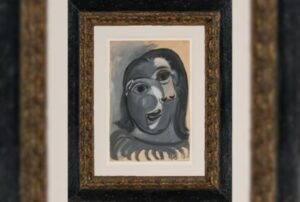
With a ticket costing 100 euros, anyone worldwide can enter a raffle to win Picasso’s Tête de femme, an original artwork valued at around one million euros, provided by Opera Gallery. The drawing will take place in April 2026 at Christie’s in Paris, one of the most prestigious auction houses globally, lending the event credibility, transparency, and international exposure.
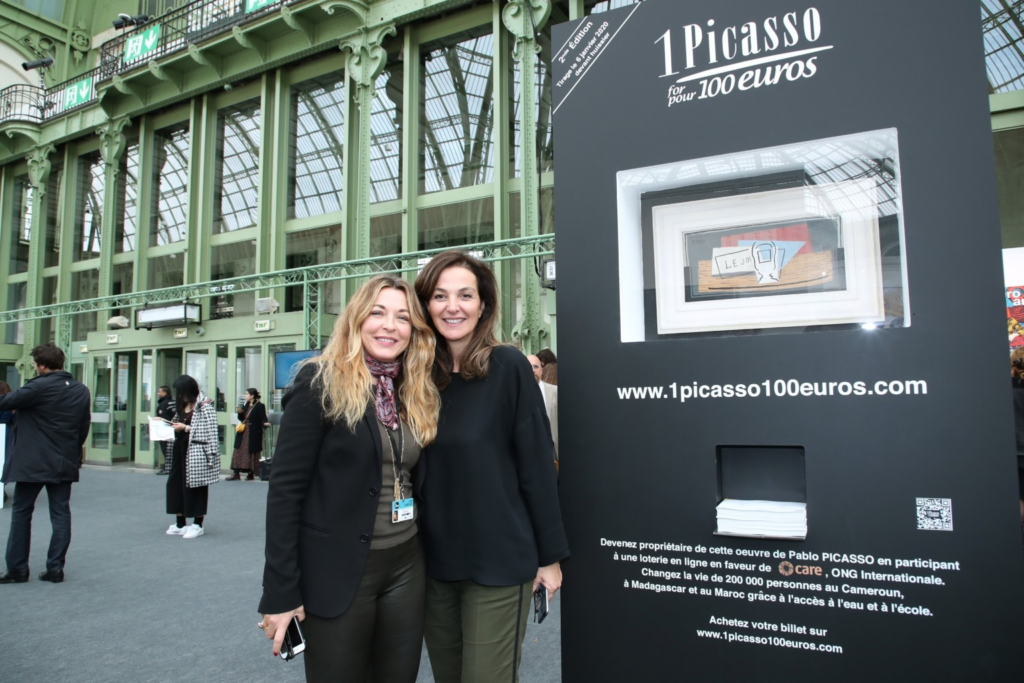
Beyond luck, the core of this initiative is deeply philanthropic. Started by Péri Cochin, the project continues its mission after previous successes. In 2013, it raised funds for the preservation of Tyre, a UNESCO World Heritage site, helping to revive traditional craftsmanship through the construction of a craft village. In 2020, the initiative engaged participants from over 100 countries, raising money for CARE to support clean water and hygiene programs during the COVID-19 pandemic.
This year, proceeds from ticket sales will fund Alzheimer’s research, a disease affecting millions worldwide, for which effective treatments remain elusive. After the lottery, the Fondation Recherche Alzheimer will issue a major call for scientific projects across France, Europe, the U.S., and Canada.
About the Artwork
The prize this time is a small yet significant piece on paper: Tête de femme, created in 1941 during one of Picasso’s darkest periods. While it’s not a monumental canvas, its artistic and historical value is exceptionally high, making the raffle even more attractive. The limited number of tickets available ensures the value of participation and the sustainability of the initiative.
Christie’s selection as the venue is not merely symbolic. The auction house is historically tied to major moments in the art market, guaranteeing the legality and transparency of the process. The drawing will be streamed live worldwide, reinforcing public trust and participation.
Can Anyone Become a Collector?
The initiative’s most intriguing aspect lies in its philosophy. In a time when art is often criticized for being disconnected from the general public and treated mainly as an investment product, projects like this reopen the conversation about accessibility. Through chance, the “ordinary person” theoretically gains the same chance as billionaires to own a masterpiece.
Critics argue the raffle turns art into a game of luck, stripping it of its spiritual depth. Others point out the slim odds make participation more symbolic than practical. Organizers respond that the real “winner” is research—and, by extension, society as a whole. The repeated success of the initiative shows public enthusiasm not just for the artwork but also for contributing to something larger than oneself.
In a world where economic, social, and cultural inequalities are increasingly visible, the idea of art as a tool for collective good gains special significance. The 100-euro ticket isn’t just a gamble; it’s a small act of participation in a global effort, with the hope that beauty and creativity can serve a purpose beyond mere aesthetic enjoyment.
The lottery will take place at Christie’s Paris on April 14, 2026, and will be broadcast live worldwide at www.1picasso100euros.com.
Ask me anything
Explore related questions