





Legendary hangouts of Athenians, in the center of the capital and in select neighborhoods, for decades. Symbols of entire eras, mirrors of society beyond their doors. But also spaces where developments took shape, as they welcomed everyone from kings, prime ministers, and top-level politicians to major intellectual figures, writers, poets, and painters, and from leading businessmen to artists and sports stars.
In some of them, pages of Modern Greek History were written; meetings of immense political interest took place; even party mechanisms were “built.” In others, entire books were written, ideas for artistic productions were born, and songs were composed that later became records.
Pieces of History
All of this, accompanied by coffee or dessert. Or vice versa. The great café-patisseries of Athens in the second half of the last century are an integral part of the capital’s history. Some were meeting points for the leading figures of their time. All of them, of course, were trademarks of the small everyday pleasures of Athenians.
In some of the most famous and luxurious ones – “Flokas” and “Zonar’s” near Syntagma – one could encounter prominent politicians, renowned writers, poets or painters, and the idolized artists of the era.
They were so intertwined with the daily life and entertainment of their patrons that they transcended the classic landmarks of each area. Appointments, which were then arranged well in advance or even the day before, were for coffee or dessert at “Flokas,” not simply at Syntagma; at “Galaxy” or “Adonis,” not just in Nea Smyrni Square; at “Alaska,” not vaguely in Kefalari.
Some became so closely identified with their neighborhoods that they effectively “named” them. Like “Sonia,” whose name is still used for bus and trolley stops, as was the case for a time with “Flokas” on Kifisias Avenue. In others, such as the legendary “Alaska,” scenes from classic Greek films were shot that remain deeply etched in viewers’ memories.
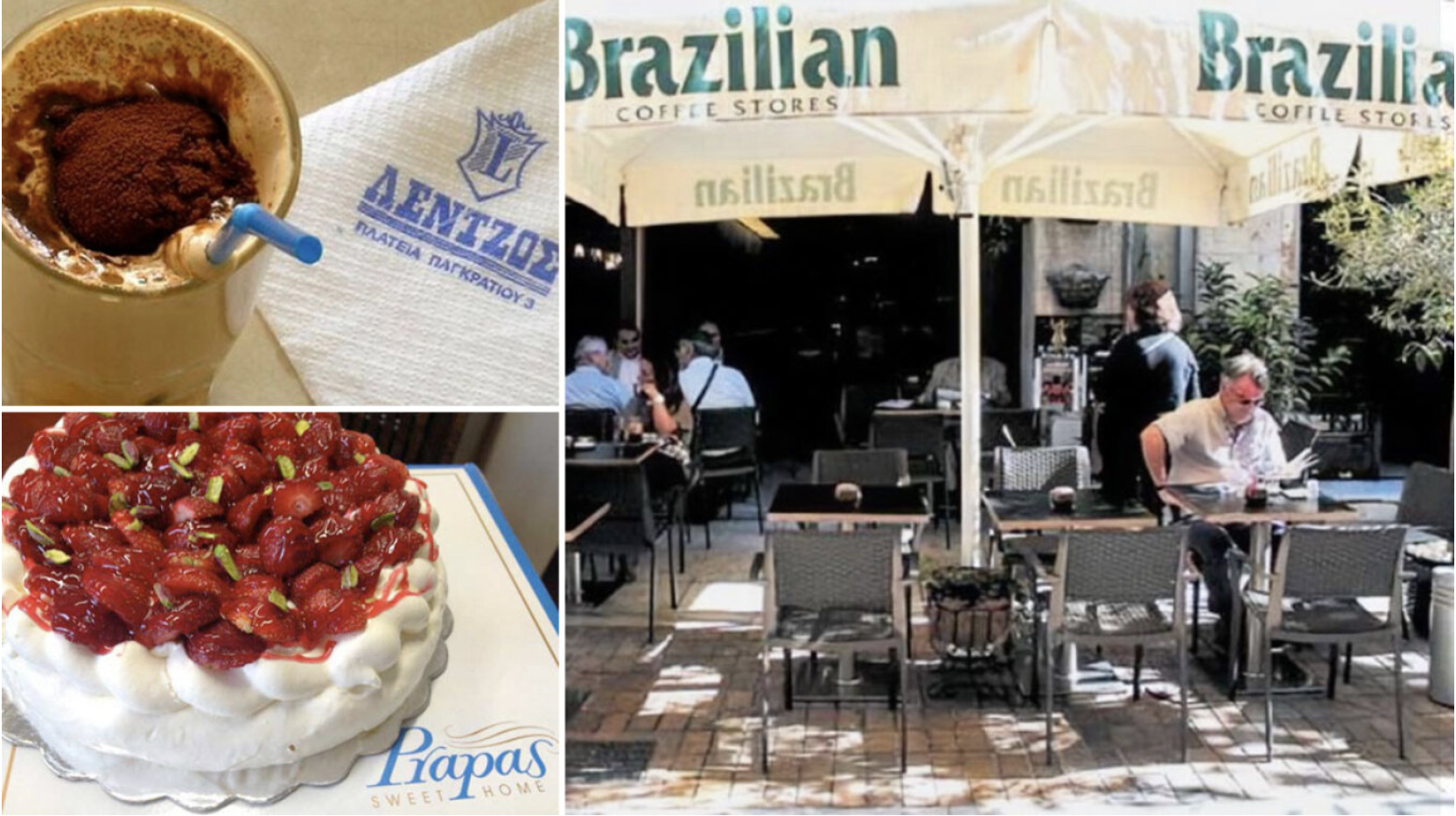
“Lentzos” in Pangrati, with its unique frappé innovation, iconic ice creams like Papaspirou’s cassata, and many similar delights elsewhere, acted as “sweet magnets” for the youth of past decades – and not only for them. How many romances were woven and vows of eternal love exchanged at the tables – obviously not the central ones, but the more secluded – of these “temples”?
Thus, entire myths were built around the names and identities of these legendary café-patisseries, sometimes even around their creators. Songs were written about some of them – major hits still heard today, as if not a day had passed, as if these hangouts still existed. Entire books were also written about them.
Of all these legendary cafés and patisseries, very few survived. Some moved to new locations, under the same or different names, with new identities adapted to modern times, and continue their journey. The rest now live on as beautiful memories, leaving behind nostalgia for a bygone era that nonetheless left a deep imprint on the shaping of modern Athens.
“Flokas”
The iconic “Flokas” patisserie opened at 9 Panepistimiou Street in 1938, where the Attica Center stands today. Its history is an impressive album of Athens’ evolution over five decades, until it closed in 1987. Among its clientele was the royal family. For the wedding of King Constantine and Anne-Marie, it prepared the wedding cake – 3.20 meters high, weighing 90 kilos, decorated with the coats of arms of the two royal houses.
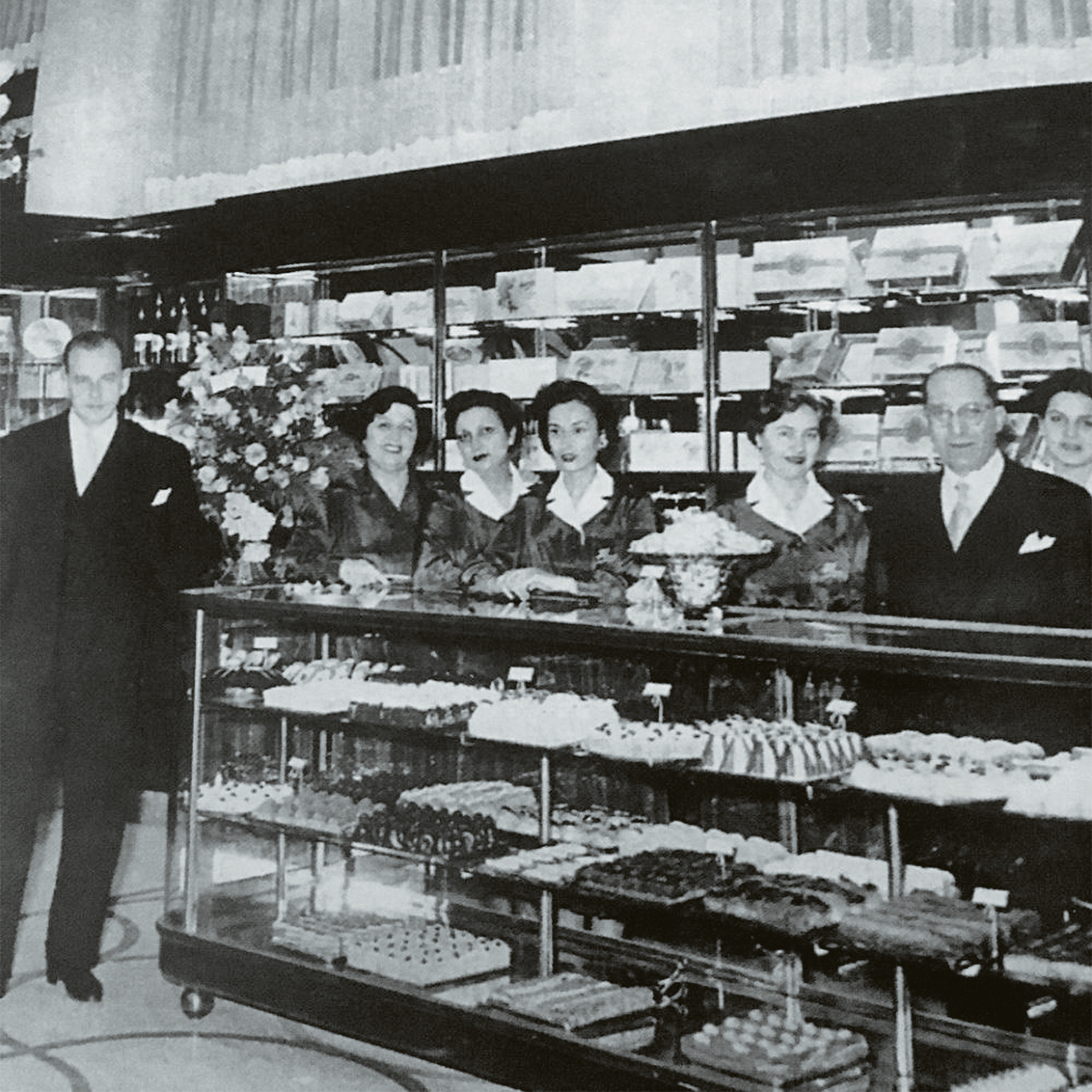
“Flokas”: The iconic patisserie opened at 9 Panepistimiou Street in 1938 and closed in 1987.
Many political figures of all stripes frequented the patisserie: Constantine Karamanlis and Amalia Megapanou, Georgios Rallis, Sofoklis Venizelos, and many others. Alongside them were giants of literature and art such as Giorgos Seferis and Odysseas Elytis, painters Yannis Moralis and Yannis Tsarouchis, and artists of the stature of Melina Mercouri, Dimitris Horn, Katina Paxinou, Alexis Minotis – as well as the great Manos Hadjidakis with Nikos Gatsos.
You could sit at a table next to personalities of such caliber. You would hear the waiters tell the bartender: “Mr. Manos’s coffee” or “Mrs. Melina’s.” Everything was simple and human – no security distances, no bodyguards, not a trace of snobbery. Yet luxury and elegance were everywhere: in the furniture, the lighting, the tableware.
Hadjidakis and Gatsos even had their own table upstairs. There they “built” their final collaboration, Athanassia. Gatsos drew inspiration from the story of a newly hired employee – also a law student, Giorgos Mitropoulos – about a crime of honor he had witnessed in the countryside, to write the lyrics for “Giannis the Murderer,” sung by Manolis Mitsias.
The “Flokas” on Fokionos Negri was another story altogether. Its patrons were mainly artists: Vangelis Papathanassiou and the members of Forminx, great actors such as Aliki Vougiouklaki, the Kazakos–Karezi couple, and Andreas Barkoulis, who usually filled its tables in the evenings after performances at nearby theaters on Patission Street.
Their preference was for the “divine” desserts of Flokas, with profiterole at the top. The importance of these patisseries for Athenians is captured in the three words of the title of Maria Varvoglis’s book Rendezvous at Flokas.
“Brazilian”
In the peculiar, ongoing rivalry between “Flokas” and “Zonar’s,” there was never a clear winner. They were neighbors, shared traits and clientele, though rarely on the same day. “Zonar’s,” founded by Karolos Zonaras, a Greek-American, opened in 1934 at the corner of Panepistimiou and Kriezotou streets and moved in 1940 to the ground floor of the Army Share Fund Building.
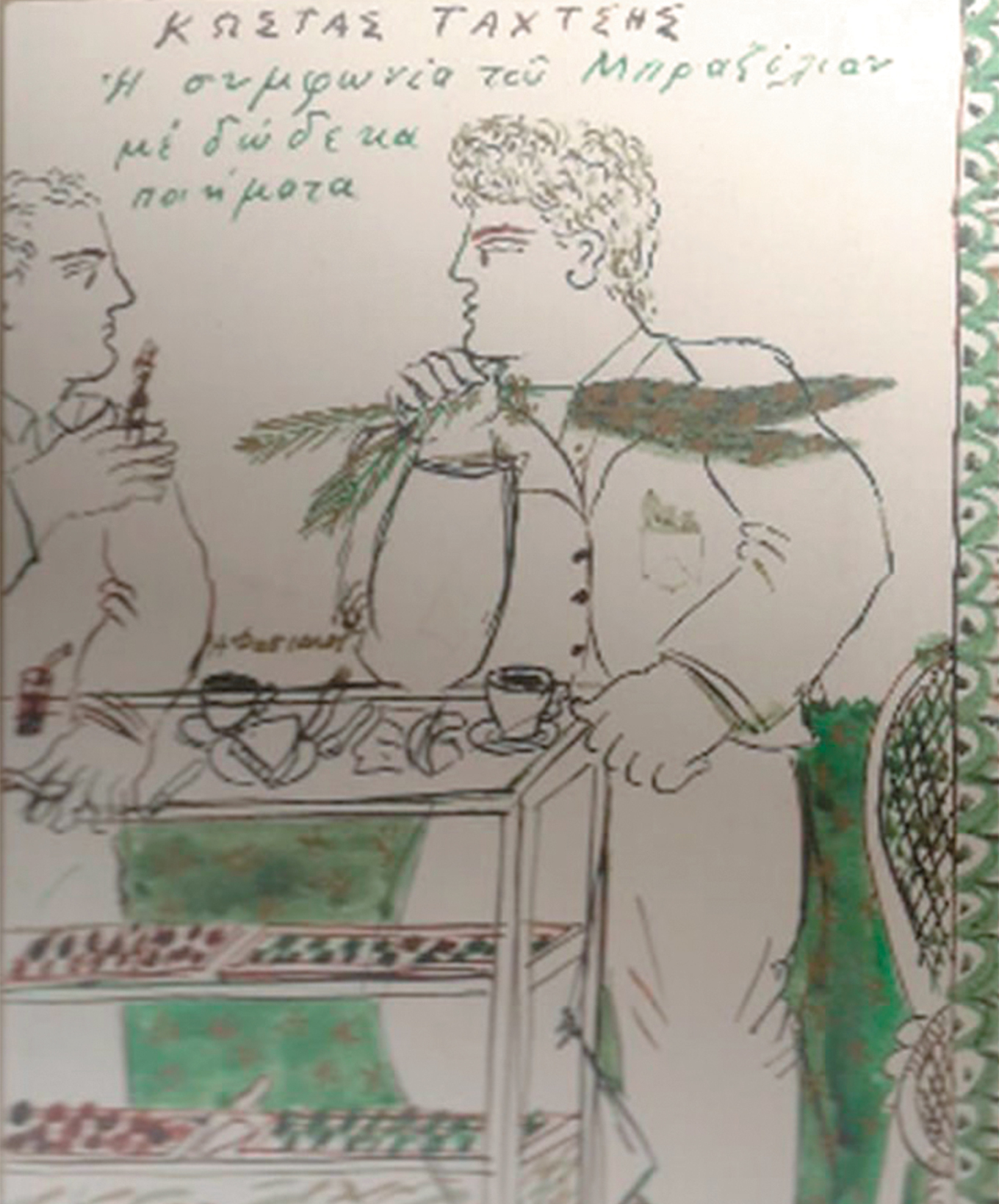
“Brazilian”: The legendary café in the Kalligas Arcade, for which Kostas Tachtsis wrote The Brazilian Symphony, closed in 2002 and today operates on Valaoritou Street.
For decades it hosted unforgettable moments – such as Hadjidakis and Melina giving a joint interview to French television – and foreign stars like Sophia Loren and Anthony Quinn sitting at its tables. It closed between 2001–2007 and reopened in 2015 under the name “Athénée Athens,” preserving its old glamour.
Many regulars of “Flokas” and old “Zonar’s” also frequented the “Brazilian” in the Kalligas Arcade on Voukourestiou Street. Leading intellectuals and artists – Elytis, Moralis, Fassianos, Mercouri, Argyarakis, Engonopoulos, Hadjidakis, Chatzikyriakos-Ghikas, Sahtouris, Katrakis, Ploritis, Tachtsis, Vakaló, Vasilikos, among others – were devoted patrons.
Founded in the 1930s by Evangelos Saravanos, it aimed to teach Athenians the secrets of Brazilian coffee. A small space, with customers standing shoulder to shoulder, but with flavors and an atmosphere that attracted the city’s cultural elite.
After Saravanos’s death in 1975, decline followed. After 1986, tables were placed outside. The café closed in 2002, later reopening on Valaoritou Street with the same name, new management, coffee, and fine desserts.
“Sonia”
The famous “Sonia,” on Alexandras Avenue near Argentina Square, made history. For decades it was a reference point for well-known figures of Athens’ intellectual, artistic, and political life, as well as a meeting place for ordinary people. It was so popular that the entire neighborhood took its name from it.
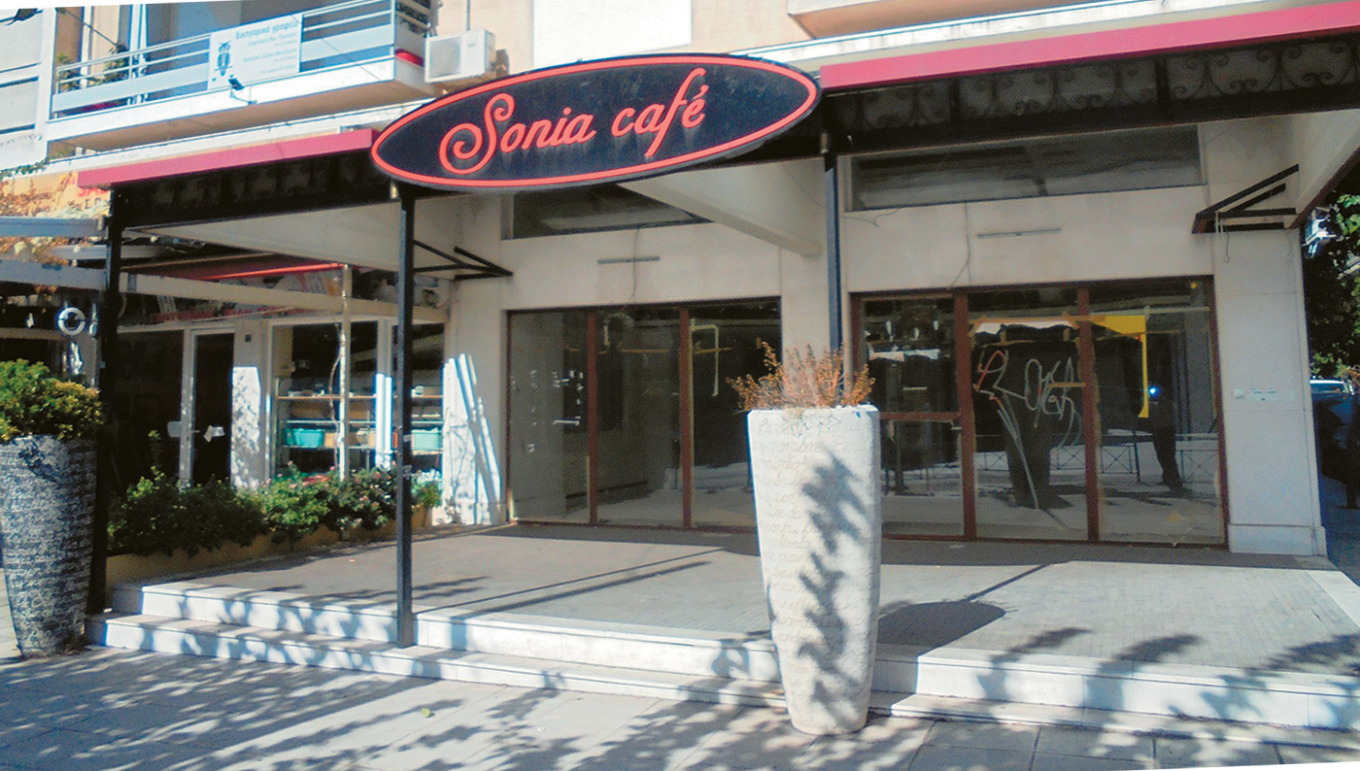
“Café Sonia”: The historic café on Alexandras Avenue opened in the 1930s and became a landmark for prominent figures of modern Greece.
It began as a traditional coffeehouse in the 1930s, founded by businessman Poubouras. With a large, airy hall and widely spaced tables to ensure privacy, it attracted diverse social and age groups from early morning until late at night.
It became closely linked to the early steps of PASOK, serving as a cradle of political planning and ferment – first for PAK members and later for PASOK. It ceased operations after 2017, but the neighborhood still lives and breathes under the weight of its name.
“Floral” in the Blue Apartment Building
With a history of 80 years, “Floral,” on the ground floor of the historic Blue Apartment Building in Exarchia, began as a patisserie in the 1930s and, over the course of time, changed ownership many times—as well as its identity.
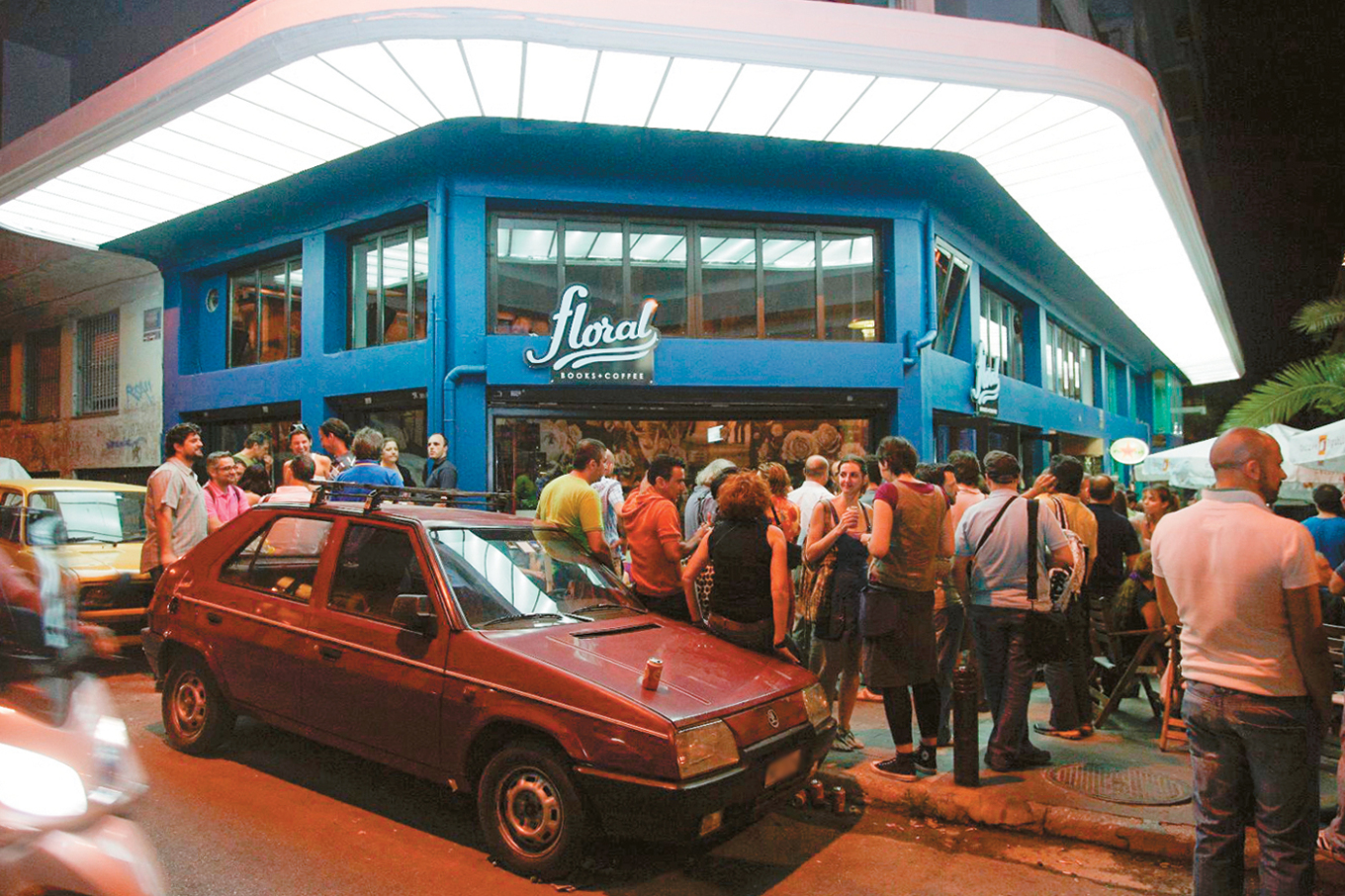
“Floral”: The iconic café of Exarchia on the ground floor of the Blue Apartment Building closed the circle of its history in 2016 after operating for eight decades.
It was a beloved meeting place both for long-time residents of Exarchia and for visitors—writers, artists, scientists, and students. Countless book presentations, film screenings, musical and other events took place in its hall, with the participation and presence of some of the brightest minds in Athens.
The Blue Apartment Building, with 34 apartments and owned by Kostis Antonopoulos, was constructed in 1933 by architect Koulis Panagiotakos, at the corner of Arachovis and Themistokleous streets. In advertisements of the era, in order to entice prospective buyers, the owner noted that it also featured, among other amenities, a “luxury café on the ground floor.”
On the first floor lived Renos Apostolidis and Leonidas Kyrkos. Regulars at “Floral” included Voula Zouboulaki and Dimitris Myrat, Dimitris Horn, the Kalouta sisters, and Lili Zografou. In later years, Sofia Philippidou as well.
At “Floral,” books by various authors were written or edited, first readings of scripts for theatrical productions took place, and songs were tried out as composers altered motifs and notes. It was renowned for its wonderful desserts. It ceased operations in the mid-1990s, reopened renovated as a multi-purpose cultural space in 2009, and lasted another seven years. It did not close because of the financial crisis; the location, due to a toxic environment, had become unbearable for any healthy business.
“Galaxy” and “Adonis”
The impressive square of Nea Smyrni hosted for decades two highly competitive café-patisseries. “Adonis,” owned by the Fragoulis family, was turned into a song by Kraounakis in 1986, and Alkistis Protopsalti’s voice made it extremely popular. And it spoke truths, because indeed at “Adonis” there were “kids” and “freaks,” athletes hung out there, and even the… “fat lady” was real. The crème de la crème of Nea Smyrni frequented it, mainly artists: Jenny Vanou, Aleka Kanellidou, Giannis Spartakos, and Stratos Dionysiou were regular customers.
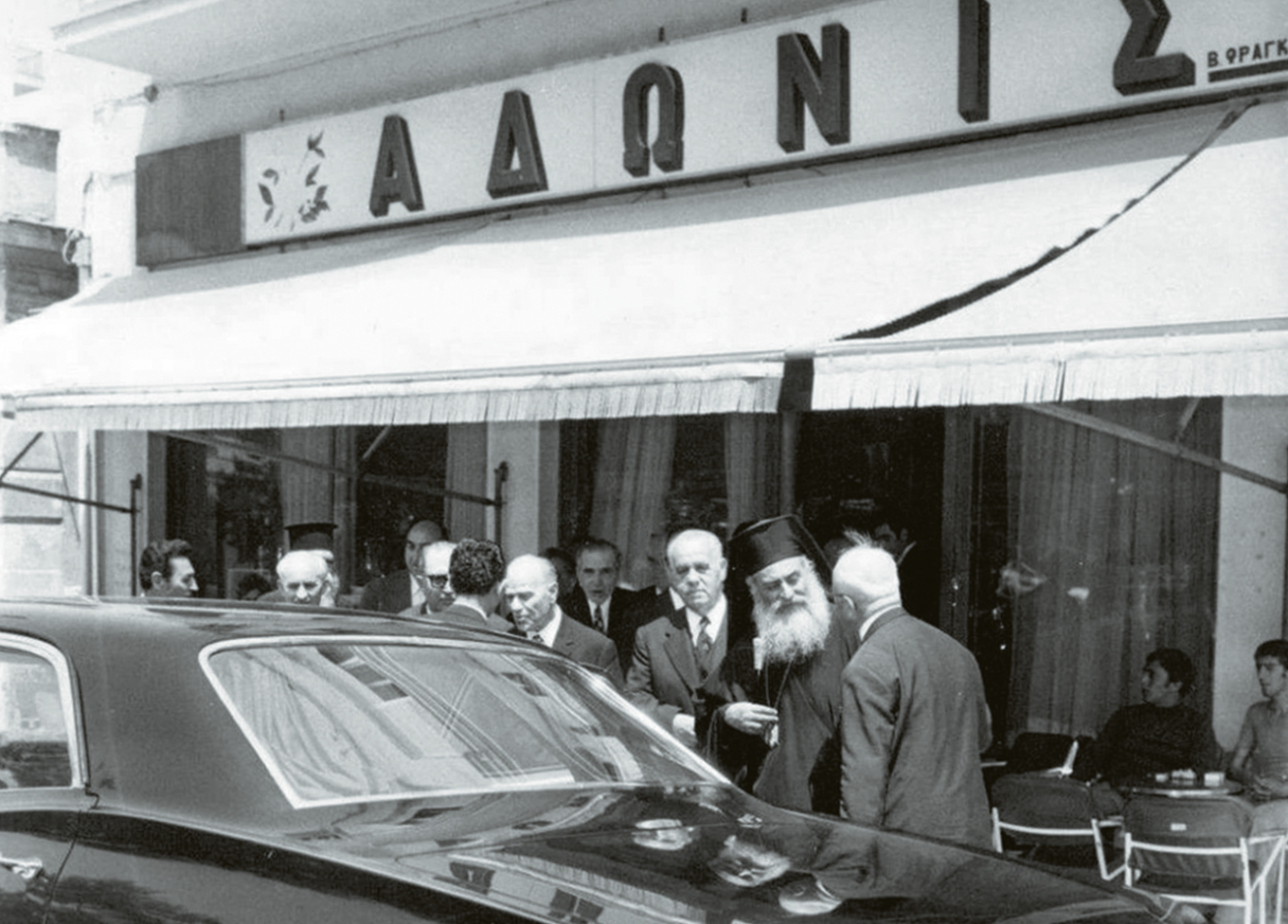
“Adonis”: The legendary Nea Smyrni venue where “kids and freaks went and athletes hung out” remained in history as a song sung by Alkistis Protopsalti.
In the middle of the square, however, stood the great rival, “Galaxy.” There, all the “tribes” of Nea Smyrni, as well as neighboring areas, gathered. A legendary café-patisserie with distinctive architecture, a nucleus of leisure. The specialty at “Galaxy”—which today operates as a municipal cultural venue—was frappé served in a glass with a holder.
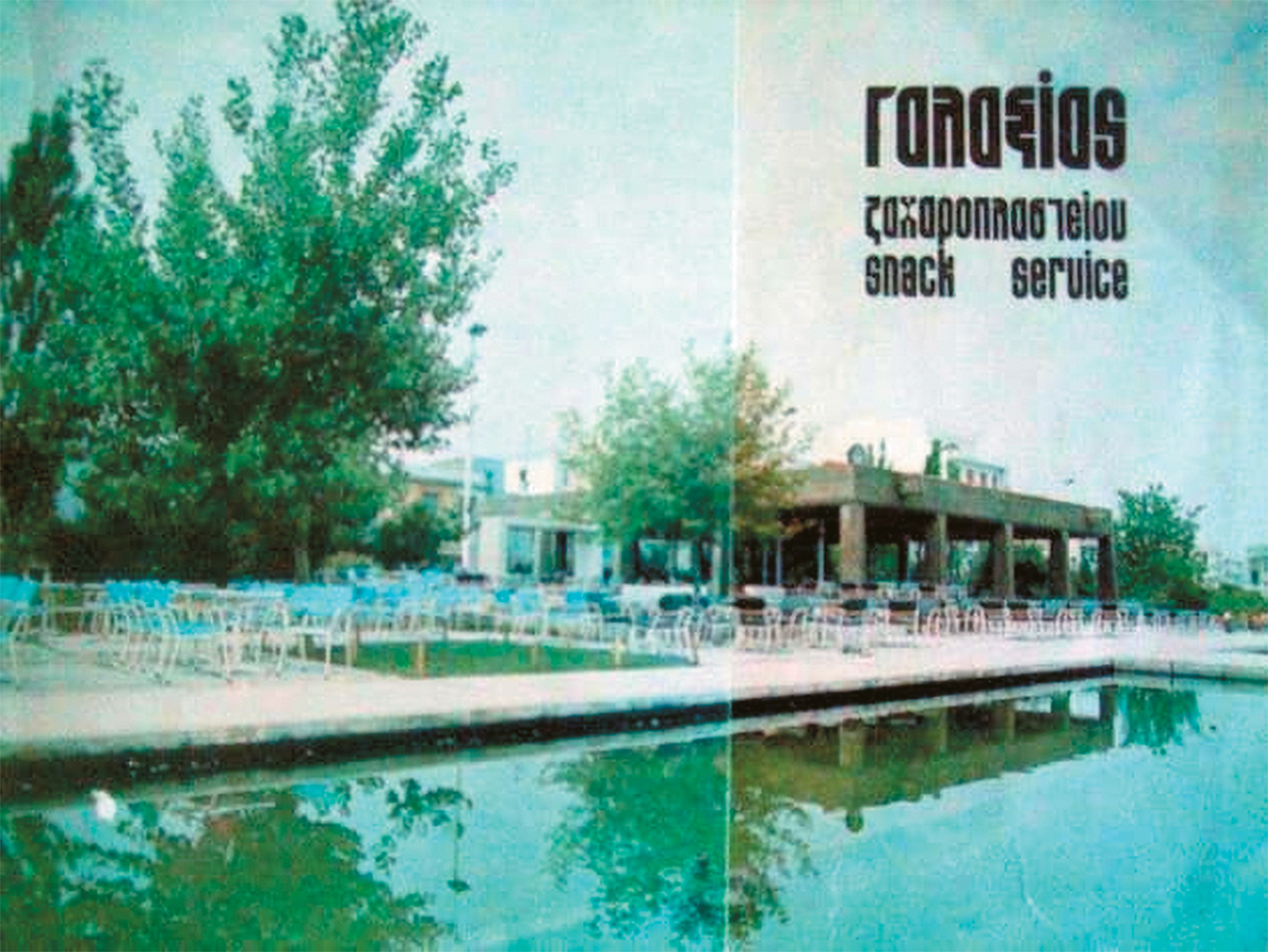
“Galaxy”: The rival of “Adonis” in Nea Smyrni Square where… athletes did not hang out, but Panionios supporters did, founding the “Panthers” there on a winter night in 1983.
Its most delicious desserts were the chocolatina, cassata ice cream, and the “fire ice cream.” Athletes went to “Adonis,” but supporters went to “Galaxy.” It was there that the hardcore Panionios fan group, the “Panthers,” was “baptized” one winter night in 1983.
Also at “Galaxy” took place the meeting of First Division footballers for their first major strike action, in view of the changes brought by professional football in 1979–80. Among those present were Domazos, Papaioannou, Chaitas, Dedes, and many others.
“Galaxy” closed in 2001, taking with it a beautiful era. “Adonis” continues, though no longer on the ground floor; now on the mezzanine, fully renovated, it tries to connect the nostalgic yesterday with the truly multifaceted and stressful today.
Ask me anything
Explore related questions


