Born between 1965 and 1980, this generation transitioned from a fully analogue world to a thoroughly digital one, continually navigating shifts in lifestyle. Voices from this generation include Niki Kerameos, Katy Garbi, Sofia Nikolaidou, Konstantinos Rigos, Nikos Psarras, Stefanos Dandolos, and Sotiris Evangelou.

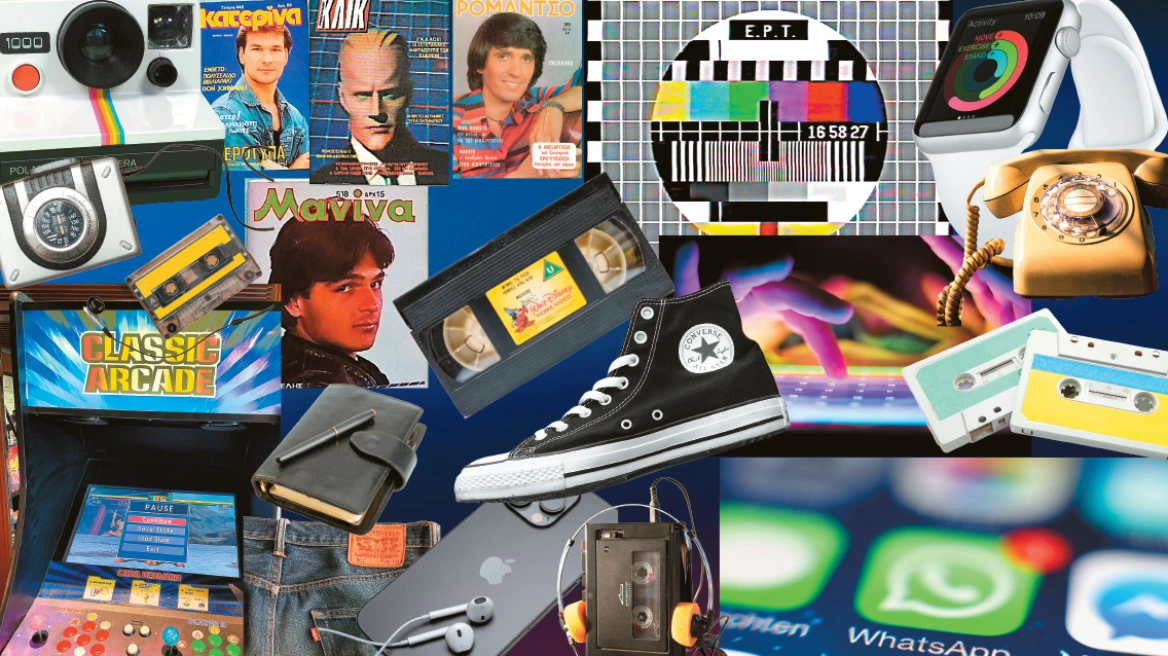
Generation X was born amid intense political upheaval and rapid change. They grew up with PASOK, MTV, fast food, ONE, the drachma, and the euro. When today’s fifty- and sixty-somethings went out to play, parents often had no idea where their children were; it was enough for them to return home once the streetlights came on. This generation essentially raised itself, leaving home as soon as they could. For boredom, their imagery is clear: slow-moving summer afternoons, holidays spent on languid ferries, the kiosk phone for communication, and film rolls with limited shots for memories.
They were schooled in resilience, flexibility, and patience. Their relationship with time, significance, work, and life differs markedly from those of other generations. And in today’s digital age, might those very traits be exactly what’s required?
Resilient by Nature
Recently, The Economist asked if Generation X might truly be the “lost generation,” noting: “Don’t pity Millennials or Gen Z — save your sympathy for those in their fifties.” The piece was illustrated with a middle-aged professional trapped within a large, cracked ‘X.’ The article described the financial and career challenges facing today’s 50- and 60-somethings. This sparked debate over whether Gen X could keep pace with modern technological demands. Some analysts hastily dismissed the generation, favouring younger cohorts who grew up clutching smartphones.
Yet, what may be overlooked is that Gen X is self-educated in new technologies and serves as the bridge between the analogue and digital eras. They’ve learned to evolve, develop, and adapt — not once, but repeatedly — while still nurturing imagination and dreams. But what does the generation itself say? How do they perceive their identity, life, art, and humanity’s future amid artificial intelligence?
Katy Garbi, Singer
“We grew up with landlines, video shops, and cassette tapes.”
I consider my generation very fortunate. We grew up with landline phones, printed newspapers, video rental stores, VHS tapes, vinyl records, and audio cassettes — both blank and pre-recorded — where we could record songs from the radio or other sources. We were also the first to use the internet and email. Even in 2026, we navigate both worlds: the analogue ‘romantic’ memory (I still write in notebooks with a pen) and the digital age’s new methods.
In the arts, we’ve reached a point where the artist and machine collaborate seamlessly. AI offers endless ideas to creators, and we, as singers, complete co-creation with voice, personal style, and, of course, emotion.
Protecting personal data and preventing algorithmic bias that might cause injustice and inequality are critical concerns. That’s why control must remain in human hands, with AI merely providing tools. Let us remain optimistic — ethical judgment, experience, and intuition remain uniquely human traits and what makes us irreplaceable.
Sofia Nikolaidou, Author
“I no longer write my shopping lists on paper.”
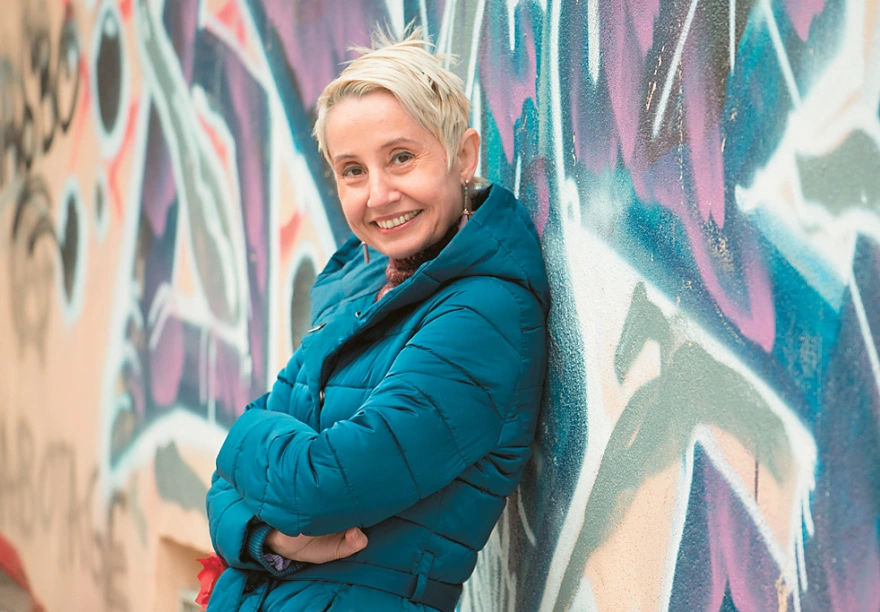
I grew up with calluses on my right hand from gripping pens tightly. I rarely write on paper anymore — not even shopping lists. I studied Classics but completed a doctorate in New Technologies. I’m not afraid to try any app or platform. But when I need to use mobile banking, I worry about making an unforgivable mistake.
Novelist Nicole Krauss once said novels resemble our homes: there’s always something broken inside (a creaky door, a dripping tap). That imperfection is the beauty of human creation. When “Chatataros” — what one of my students calls ChatGPT — can imitate the little mistakes and imbalances that make art human and charming, then we’re in trouble. For now, in news reporting and AI accountability, the game might already be lost.
Konstantinos Rigos, Choreographer-Director
“We are the bridge generation.”
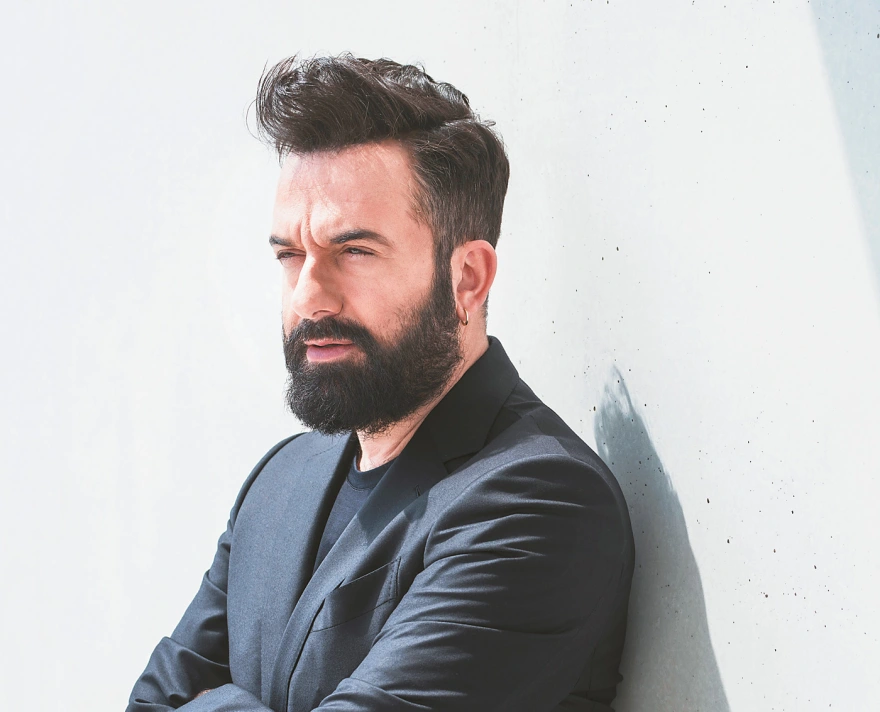
We belong to a generation born in time, not speed. We learned to wait, seek, and imagine before finding. We experienced the anxiety of dates without confirmation texts, the joy of discovering places not marked on maps. We touched music — on records and tapes — and patiently awaited music videos on TV like little rituals. We learned to seek information by leafing through newspapers, getting lost in libraries, and collecting objects and experiences.
We went out, talked, argued, and — most importantly — looked each other in the eye. That physical closeness taught us not just knowledge, but empathy — human contact before screens intervened. As a bridge generation, we translate between slow and fast worlds, tangible and digital realities. We carry memory, perspective, and balance. That’s why we often feel a bittersweet nostalgia: we know what we’ve gained, but also what’s been lost forever.
Artificial intelligence ushers in another revolution, sparking anxiety: how far will it go? Will it serve humanity or replace it? Will it liberate us or homogenise us? The fear of waking in a cold, controlled sci-fi world — a Dune-like universe — coexists with hope that technology will bring us back to essentials: thought, creativity, and connection. Ultimately, the future might not be decided by how smart machines become, but by whether we manage to stay human. Here, the bridge generation plays a role: reminding us where we began so we don’t forget where we want to go.
Niki Kerameos, Minister for Labour and Social Affairs
“The value of human contact.”
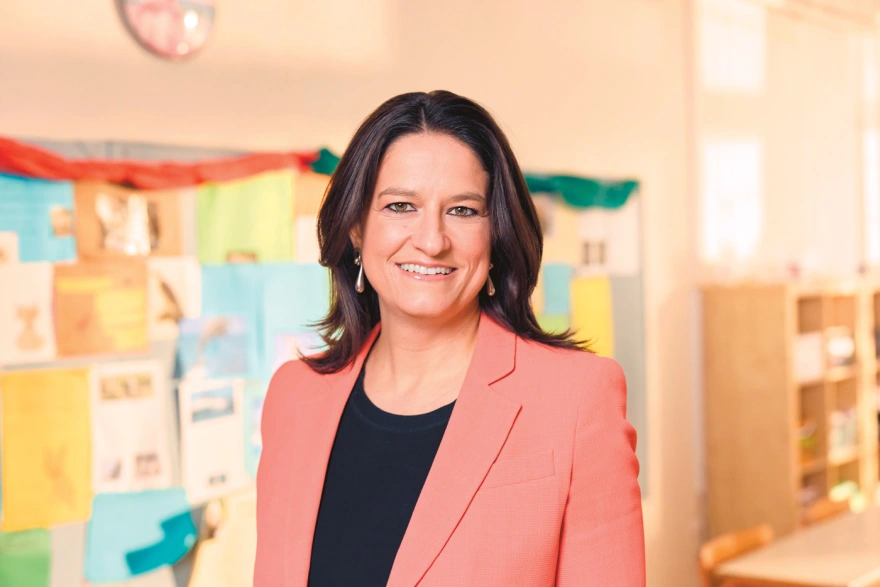
Our generation truly is a bridge between the analogue and digital eras. We grew up in a slower, more linear, and more predictable world, and then had to adapt to a radically different reality where speed, constant change, and digital connectivity dominate.
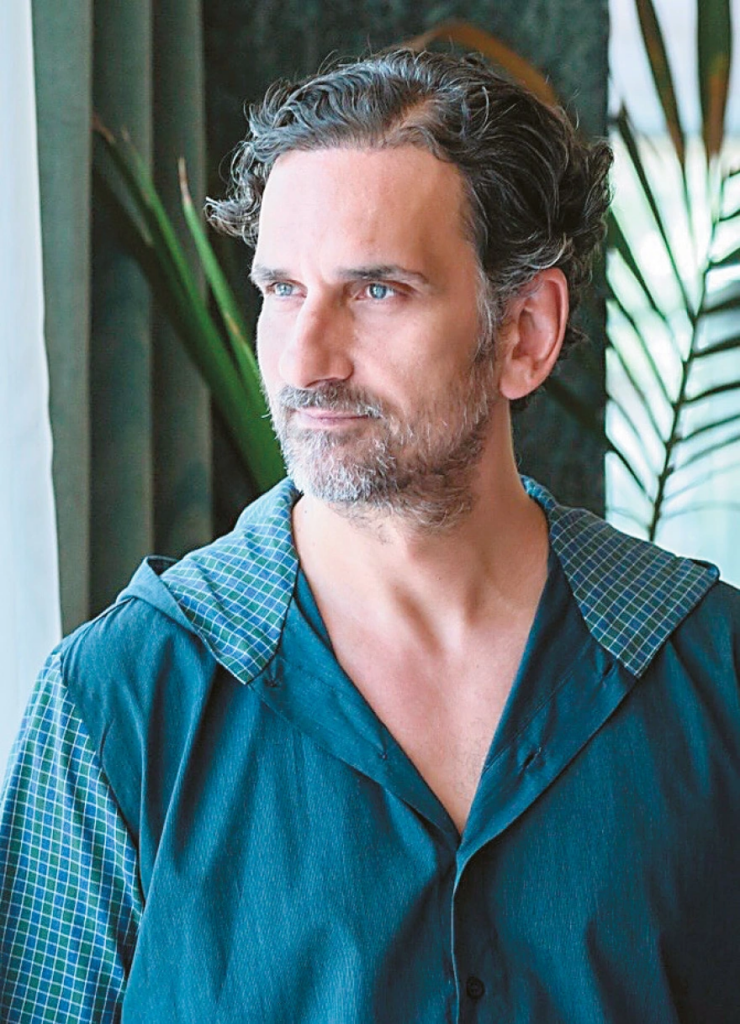
From a world where knowledge and professional development came gradually and through personal experience, to one of instant information transmission, rapid expansion of knowledge fields, and a continual need to acquire new skills for career advancement.
This dual experience shaped us into a generation that hopefully retains critical thinking and values human contact, while integrating technology as a tool — not an end in itself.
AI can be a powerful lever for progress, improving productivity, public services, health, and education. But only if we ensure the protection of jobs, privacy, freedom, and ultimately democracy. The new era’s challenge is not just technological but deeply political and ethical.
What I hope — and consider our duty — is to shape a framework where technology serves people, reduces inequalities, and strengthens society’s capacities without replacing human judgment and responsibility.
Stefanos Dandolos, Author
“The keyboards that changed us.”
Personally, from typewriters — which I often struggled with and preferred handwriting — to keyboards, which I also struggled with but still preferred handwriting, I’ve seen myself change, and thus my writing.
I believe I’ve become more concise, more abstract, even in my densest texts. I think life will change enormously in the coming years.
AI is not just an assistant. It can bring rapid advances and scientific marvels. But it’s also very dangerous because information isn’t always accurate. Surely, many workers will lose their jobs, and many others will become underemployed.
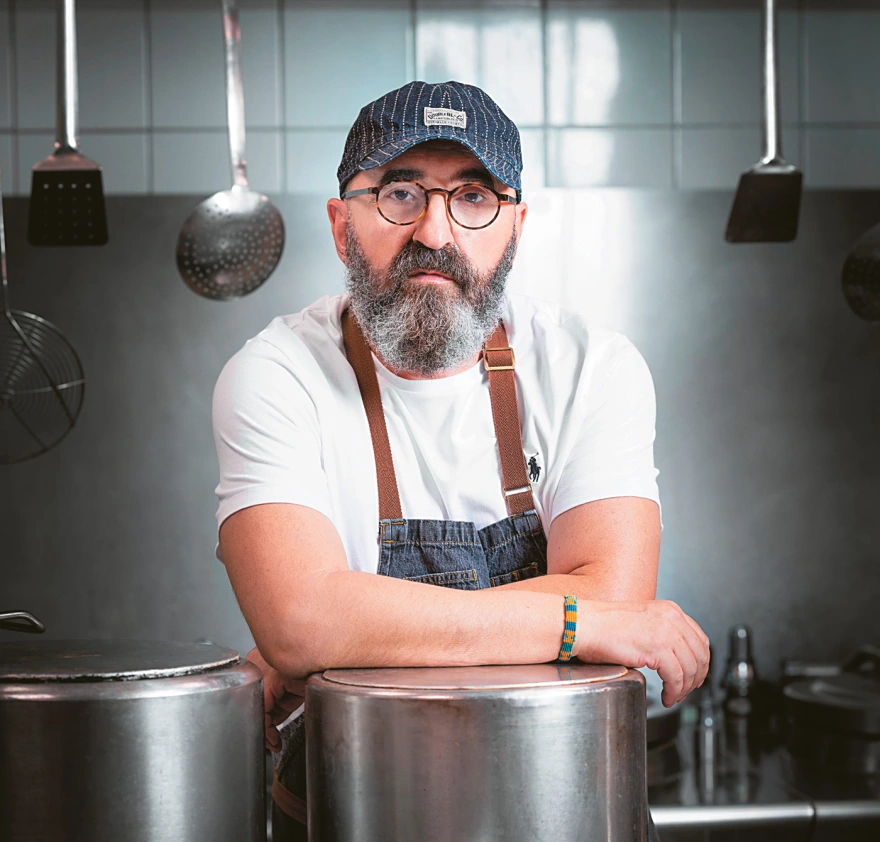
We need respect for this medium and great caution to avoid mutated societies losing their ethics to the benefit of machines.
Nikos Psarras, Actor
“We have memory and adaptability.”
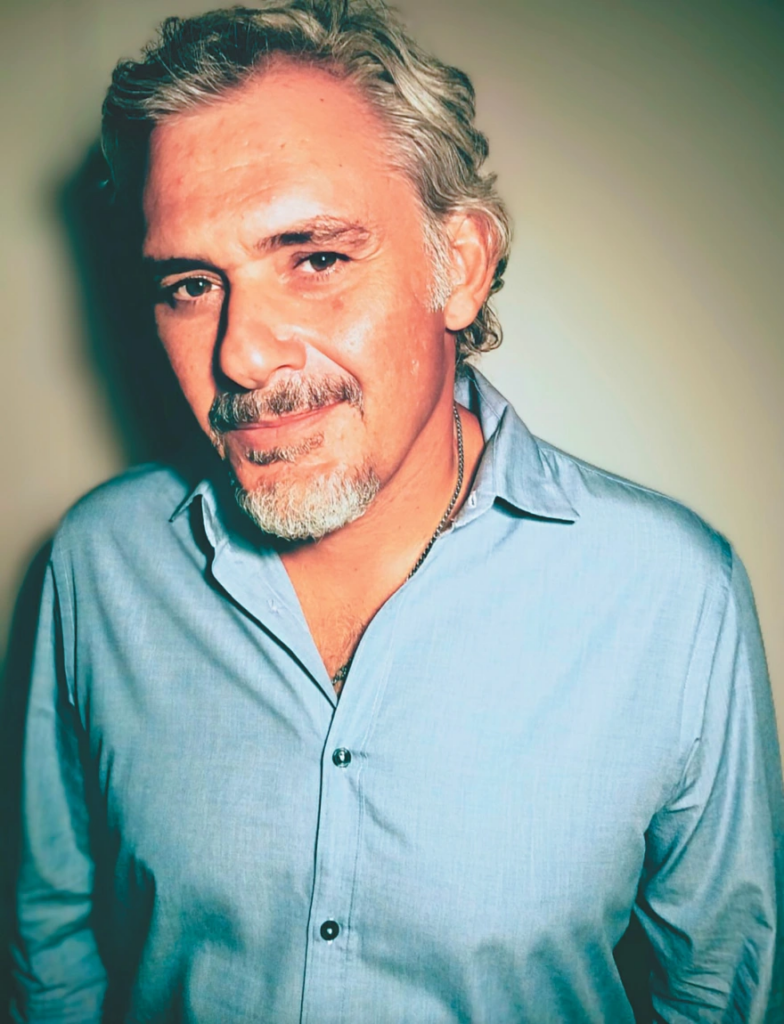
I belong to a generation that first learned to wait and be patient. On one hand, we carry the memory of slowness: mistakes not easily fixed, rehearsals needing to be right because there wasn’t endless ‘editing,’ valuing time as precious.
On the other hand, we entered the digital age early enough not to fear speed, constant change, or exposure.
In acting, this translates to constant intensity. I trust the body, silence, and gaze — all things that cannot be digitised. At the same time, I understand the medium changes, storytelling shifts, and today’s actor must be present and flexible.
As a bridge generation, we learned not to demonise the new but not to sacrifice the essential for speed’s sake.
Perhaps that is our greatest strength: we have memory and adaptability. We know where we come from and are not afraid of where we’re going — as long as we don’t lose humanity along the way.
I don’t believe AI threatens us. If AI forces us to defend these qualities, it might paradoxically act as a mirror reminding us who we are — and who we don’t want to become.
Sotiris Evangelou, Executive Chef
“For us, knowledge came from experience.”
Being Gen X profoundly shaped me as a chef. I learned the craft the traditional way — at the bench, through practice, observation, and respect for the process.
For us, knowledge didn’t come from screens but from experience, like a properly made risotto, well-kneaded bread, or broth simmered for hours to develop flavour.
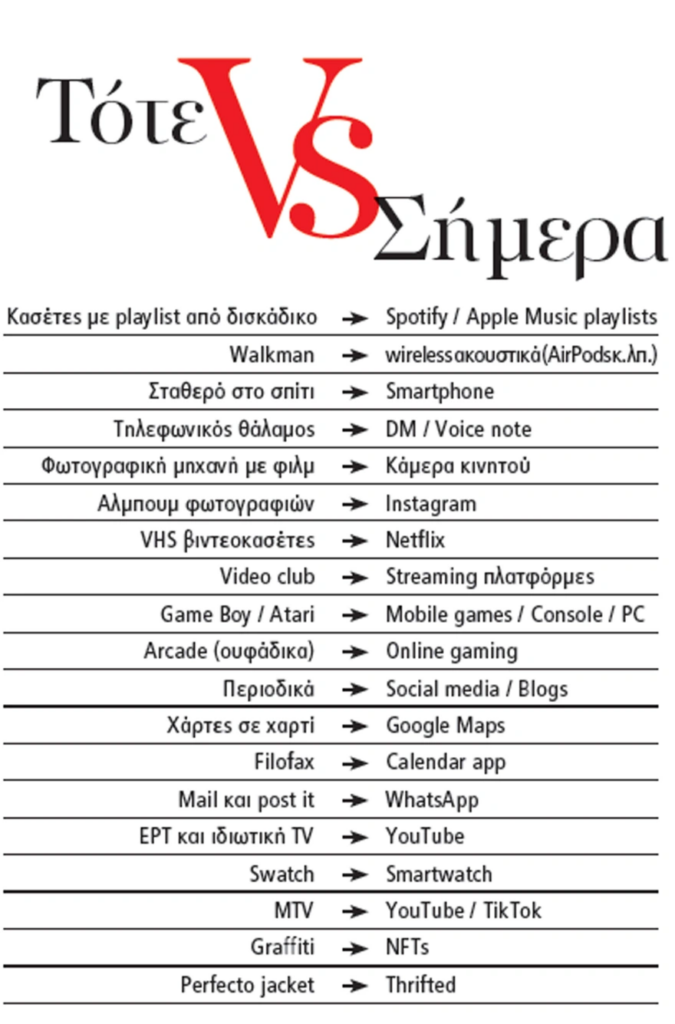
When technology entered our lives, I didn’t see it as a threat but as a help. It aided me in research, organisation, costing, and menu creation, without losing my culinary identity.
I can follow modern trends, but my foundation remains technique, taste, and the feel of the dish. This “dual perspective” has given me balance and resilience in my career: to evolve continually while keeping food real, human, and delicious.
No matter how digital the world becomes, cooking remains an art of the senses and soul. AI can help chefs be more creative and efficient, inspire new flavour combinations, reduce waste, improve costing, and streamline kitchen operations.
Its future should be like a great dish — technical in execution but human in taste.
Ask me anything
Explore related questions