






In Madrid, Prague, and Paris, electric scooters will be banned starting from the first day of 2026. In Florence, the operation of rental scooters will be permanently terminated in April.
The revision of the Italian Highway Code, which obliges owners of electric scooters to insure them and issue license plates, “complicates the situation,” according to local authorities. Insurance for scooters has also become mandatory in Spain, where a state fund was even created to compensate victims of traffic accidents involving uninsured scooters, following the example of Germany, where riding an uninsured scooter without plates is a criminal offense. Could similar measures be introduced in Greece, where around 5,000 scooters—rental or privately owned—are currently in circulation?
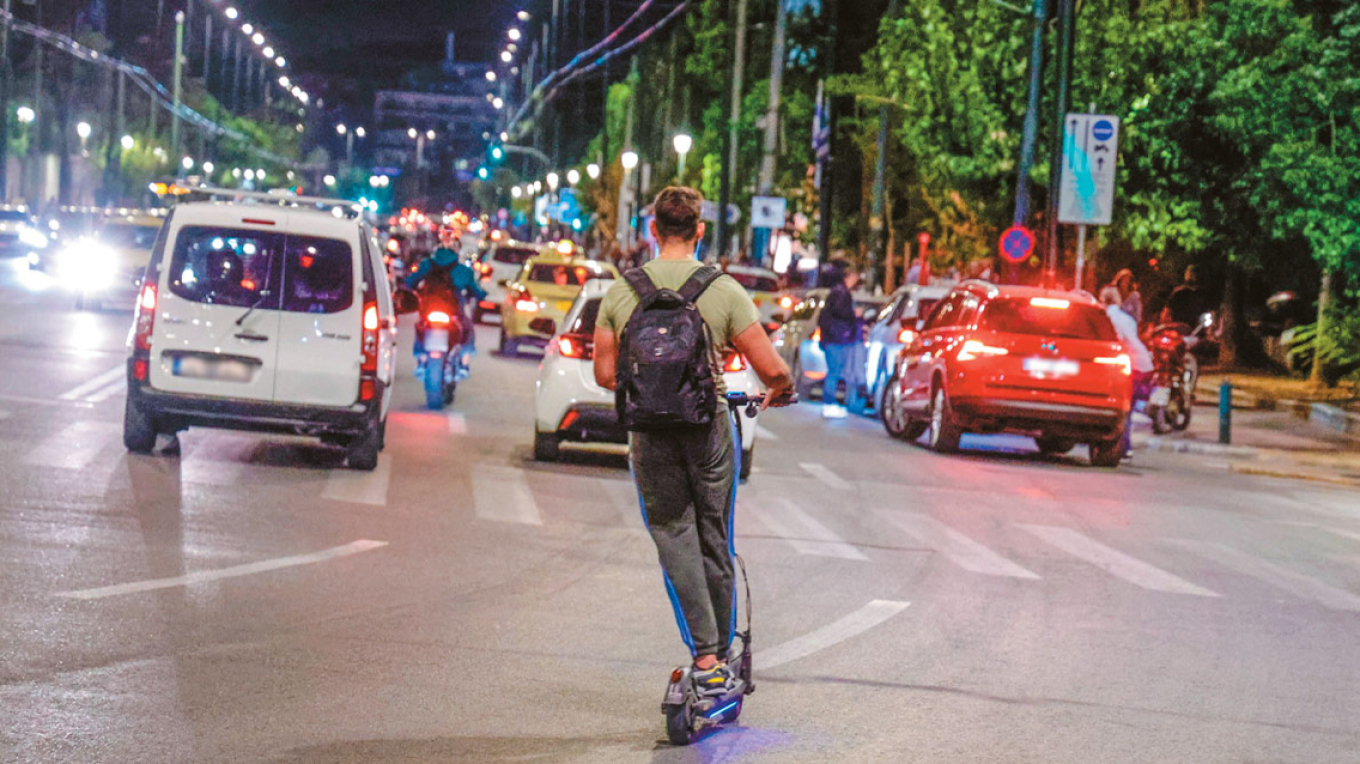
Government sources told Proto Thema that the issue is on the government’s radar, but will be examined once higher-priority road safety matters are addressed. As they note, the primary goal is to reduce—if not eliminate—road deaths and injuries involving all types of vehicles in Greece, and only afterward regulate civil liability issues. In reality, however, the matter is far more complex than it appears.
The new Highway Code principle of penalizing the driver, not the vehicle, is proving effective with the first fines issued. In this context, the first electric scooter rider fined (€300 and vehicle removal by tow truck) for riding under the influence—after being stopped at an alcohol checkpoint on Panepistimiou Street—reportedly had lost her driver’s license just days earlier for the same offense, this time while driving a car.
Prison sentence
While her father has protested and said he will challenge the fine in court, other countries take the issue even more seriously. In Norway, for example, a 40-year-old woman caught riding an electric scooter while intoxicated was sentenced to two weeks in prison (suspended), lost her driver’s license (and must retake the exam 18 months later), and was fined €9,500.
Since Greece has not yet reached the level of social responsibility required for the safe circulation of any type of vehicle—so as not to endanger other road users (or pedestrians, etc.)—lawyers and insurance professionals have begun raising concerns about coverage for damages and other civil claims caused by electric scooters. Another issue is identifying individuals who commit violations using such vehicles.
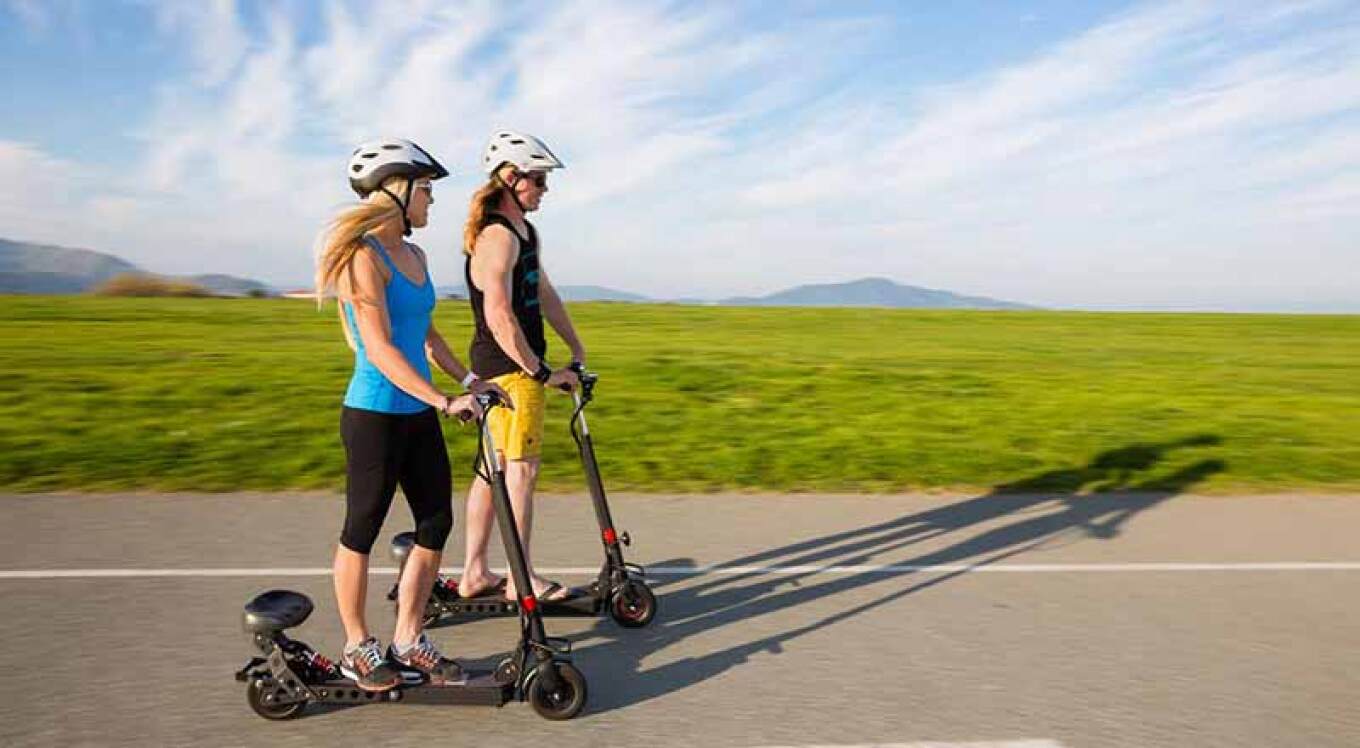
Legal experts explain that claims for compensation will inevitably reach the courts when drivers suffer damages caused by uninsured electric scooter users. This is because—at least for now—there is a distinction whereby half of road users (drivers of cars, trucks, and motorcycles) are required to have insurance and license plates, while scooter riders are not obliged to have insurance or vehicle identification.
The fact that compensation—even acknowledgment of damage—depends on the goodwill of the PLEV (Personal Light Electric Vehicle) user, since identification is otherwise often impossible, is also why Greece lacks reliable official statistics on traffic accidents involving such vehicles.
Compensation
An even bigger problem is that because scooters are classified as Personal Light Electric Vehicles and are not legally required to be insured, damages and injuries they cause are not covered by the Auxiliary Fund, unlike uninsured motorcycles or cars. On the other hand, drivers harmed by a PLEV may turn to the Auxiliary Fund (epikef.gr), which compensates bodily and material damages caused by vehicles when the responsible party is unknown, uninsured, or when the insurer has collapsed or lost its license. Although the Auxiliary Fund does not publish vehicle-specific data, last year it paid out €14.39 million in compensation (€8.28 million for uninsured vehicles and the remainder for unknown vehicles and assistance cases).
What clearly indicates what lies ahead for electric scooters and the question of mandatory insurance is what is happening in other EU countries. Electric scooters moved in just a few years from the margins to the center of urban mobility. They are fast, relatively cheap, and flexible—especially in dense cities. But they also raised questions: who can ride them, where, at what speed, whether helmets, insurance, or even license plates are required. There is no single European rule. Each country charts its own course—sometimes strict, sometimes more relaxed—trying to balance road safety with the promotion of micromobility. The result is a regulatory mosaic with significant differences between countries.
Below is an overview of what currently applies in key European states, with emphasis on insurance, Highway Code changes, and whether license plates are mandatory.
Insurance is where differences are most pronounced. One school of thought—represented by Germany and France—considers mandatory insurance self-evident due to the risk of injuries and material damage. Another—previously followed by Italy, Spain, and Austria—favored a more flexible approach, leaving the decision to users or municipalities. That, however, is changing.
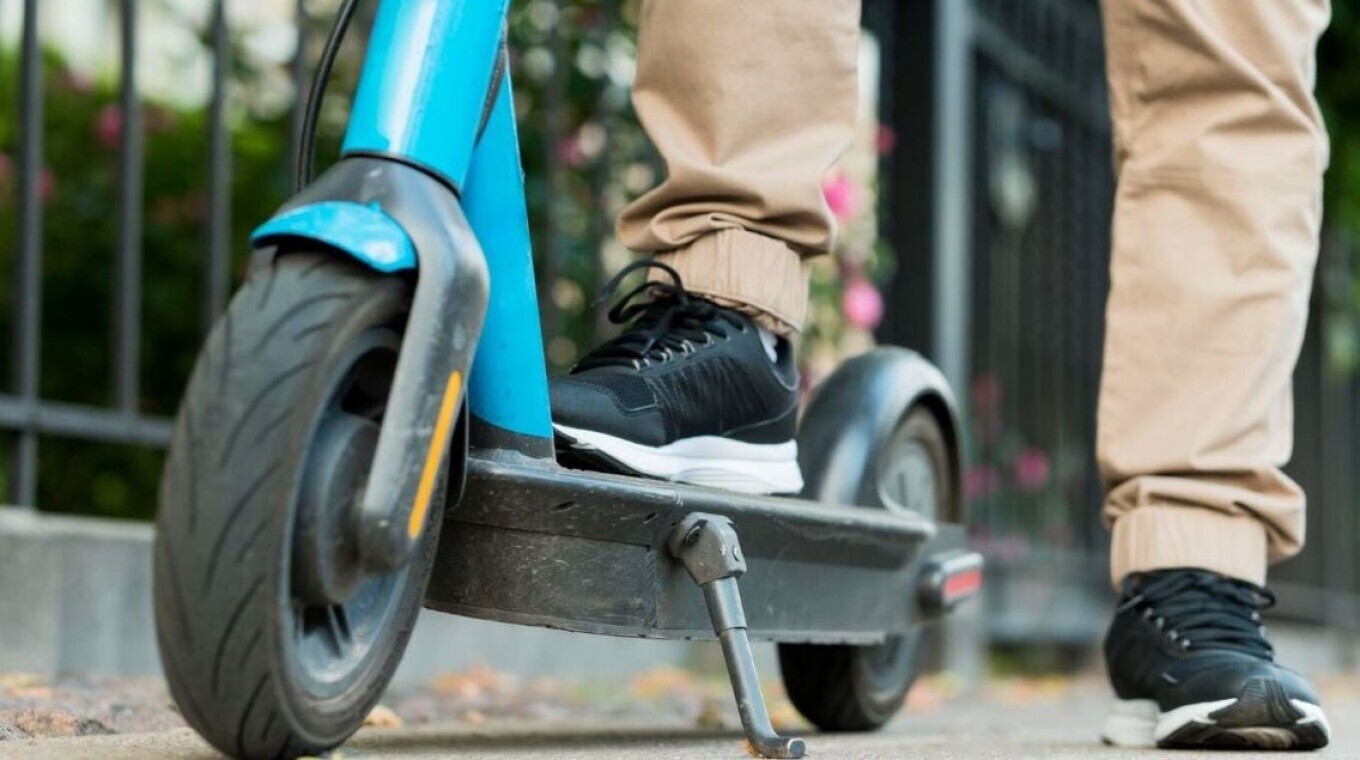
A characteristic example is Italy, and specifically Florence. The city’s Deputy Mayor for Transport, Andrea Giorgio, announced that in April the electric scooter rental system will cease operating, as the revised Highway Code “makes it extremely difficult to ensure user compliance with these requirements, even with continuous municipal police checks.” Italy’s new Highway Code requires scooter riders to wear helmets regardless of age, display identification plates, carry insurance, and prohibits exiting urban boundaries through geofencing.
In Italy, shared scooter operators must install GPS devices that read the scooter’s location and prevent use outside designated urban areas.
One key issue concerns the production of special license plates. Italy’s state printing office (Poligrafico dello Stato) sets the criteria for alphanumeric codes, but it remains to be decided who will produce the plates and how much they will cost consumers.
Traffic accidents
In Spain, the explosion in scooter use led to a surge in traffic accidents and pedestrian injuries, prompting stricter rules effective from January 2. Under these, all electric scooter and bicycle users have the same obligations as other vehicle owners. They must carry mandatory civil liability insurance covering material and personal damages to third parties. Estimated annual premiums range from €20 to €100, according to insurers. Riding an uninsured scooter can result in fines up to €1,000, while failure to issue license plates carries an additional €500 fine. The new regulation also requires registration in the General Directorate’s registry and possession of a circulation certificate certifying technical compliance.
License plates
Vehicles must display a visible license plate or identification label enabling identification in case of violations. Spain’s Auxiliary Insurance Fund (Consorcio de Compensación de Seguros) will now also cover electric scooters.
Germany was among the first countries to establish a clear legal framework in 2019 with the Elektrokleinstfahrzeuge-Verordnung. Scooters are classified as low-power motor vehicles, with a maximum speed of 20 km/h. Civil liability insurance is mandatory, and riders must display a special insurance sticker renewed annually. Traditional license plates are not required, but the sticker is compulsory and effectively replaces them.
In France, electric scooters were officially incorporated into the Highway Code in 2019 as “motorized personal mobility devices.” The framework has since been amended several times, mainly after fatal accidents in Paris and other major cities.
The maximum speed is 25 km/h, with lower limits in many urban zones. Riding on sidewalks is prohibited unless explicitly allowed by local authorities. Civil liability insurance is mandatory even for private scooters, a fact often overlooked by users. License plates are not required, but scooters must be equipped with lights, reflectors, and a bell. Helmets are mandatory for minors and optional for adults. France shows a trend toward stricter regulation, emphasizing rider responsibility and coexistence with pedestrians.
What applies
ITALY: Mandatory helmet for all ages, identification plate, insurance coverage, and geofencing that restricts riding outside urban areas.
SPAIN: Electric scooter and bicycle users have the same obligations as other vehicle owners. Mandatory civil liability insurance covering damage or injury to third parties.
GERMANY: Scooters are classified as low-power motor vehicles, with a 20 km/h speed limit. Mandatory civil liability insurance and an annual insurance sticker instead of traditional plates.
FRANCE: Maximum speed 25 km/h (lower in many urban areas). Sidewalk riding prohibited.
Ask me anything
Explore related questions