





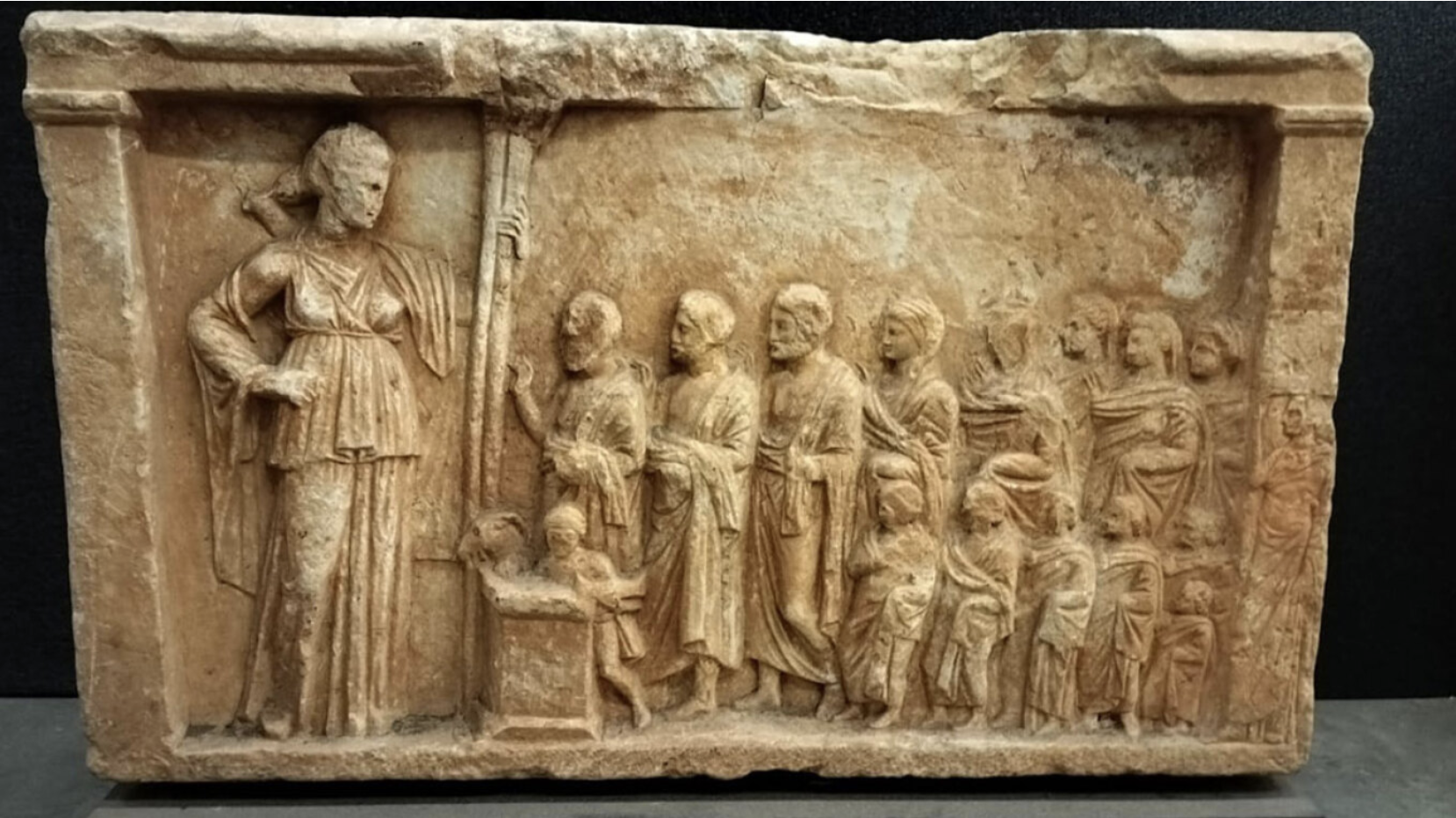
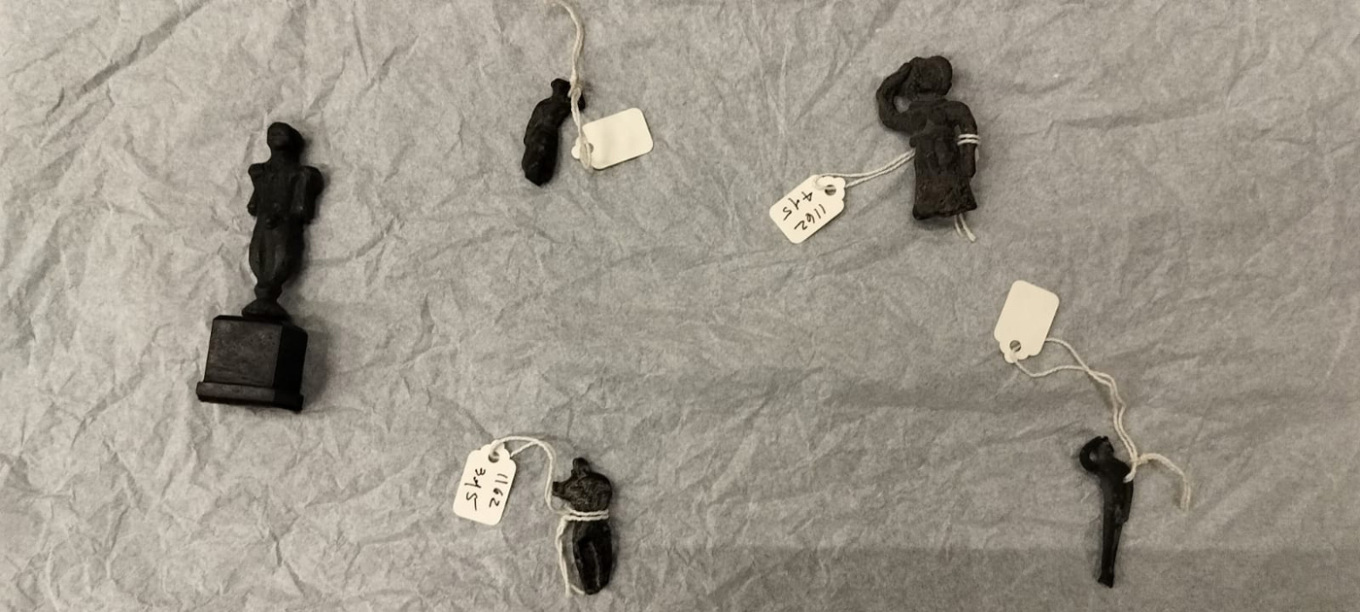
An Attic marble votive relief dating to the second half of the 4th century BC, along with five bronze anthropomorphic figurines that were in the possession of the company Robin Symes Limited, currently under liquidation, were repatriated from London today (22/1), following the successful outcome of a long-standing claim, according to an announcement by the Ministry of Culture.
The Greek state’s claim for the repatriation of the ancient objects began in 2006, and these items will be added to the hundreds of objects that were repatriated from the same company in May 2023.
The Minister of Culture, Lina Mendoni, stated:
“The repatriation of antiquities from the company Robin Symes constitutes yet another significant result of the systematic and well-organized effort of the Ministry of Culture to protect and recover our cultural heritage. With methodical work, legal documentation, and consistency, a long process has been completed, proving that the Greek state never abandons any claim. The return of the votive relief and the bronze figurines is part of a consistent strategy which, in recent years, has delivered tangible results, with hundreds of objects already repatriated. The Ministry of Culture will continue, with the same determination and seriousness, its efforts to locate, document, and claim antiquities that have been illegally removed from our country. Each object is part of our identity and our history.”
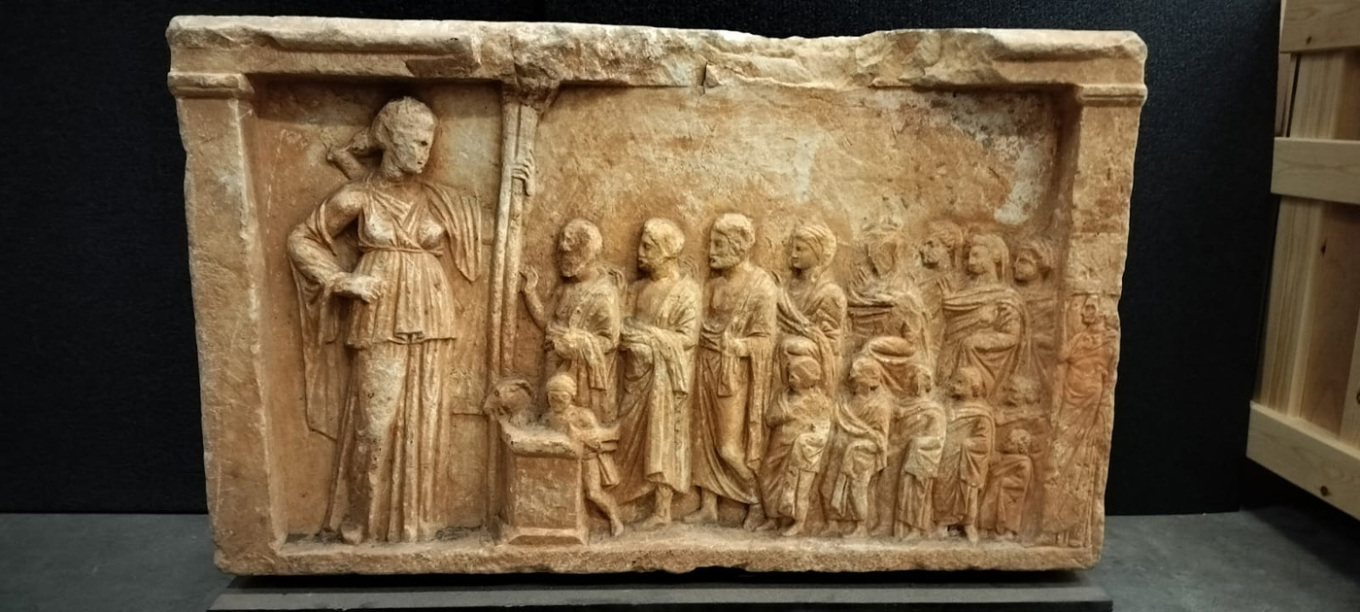
As stated in the Ministry of Culture’s announcement, the marble votive relief (52 cm high and 92 cm wide) is shaped like a small shrine (naiskos) with side pilasters bearing capitals that support an architrave and a horizontal cornice. According to the inscription (Artemidi Mounichiai) engraved on the architrave, the relief is a dedication to Artemis Mounichia. The depiction shows Artemis standing, imposing, and securely identified—beyond the inscription—by the quiver visible behind her back. With her left hand she holds two upright lit torches, while her right hand is in a mediating gesture. She wears an Attic peplos, fastened below the chest, and a himation. Her hair is gathered into a short ponytail, a common hairstyle for the young virgin goddess. In front of her is a low altar that serves as a dividing element between the goddess and the mortal worshippers who approach in procession from the right. Behind the altar is depicted the head of an animal (a young goat) intended for sacrifice, and a boy, the small servant holding the kanoun, the shallow tray containing the necessary items for the sacrifice.

The worshippers on the right are rendered on a smaller scale than the goddess. Eight adult figures are depicted—three male figures raising their right hand in supplication and five female figures—along with six children in front of them. Another figure, a maidservant belonging to the household staff, is rendered in low relief on the pilaster. With her raised right hand, she balances a cylindrical cista on her head. The “speaking” inscription on the architrave securely identifies the sanctuary from which the relief originates: the sanctuary of Artemis Mounichia, located on the southern side of the harbor of Mounichia (today’s Mikrolimano) in Piraeus. An extremely limited number of sculptures are known from this sanctuary, a fact attributed to the successive destructions the site suffered already in antiquity. The relief arriving from London, as a product of illegal trafficking, is the first relief known from this highly significant sanctuary of Artemis Mounichia.
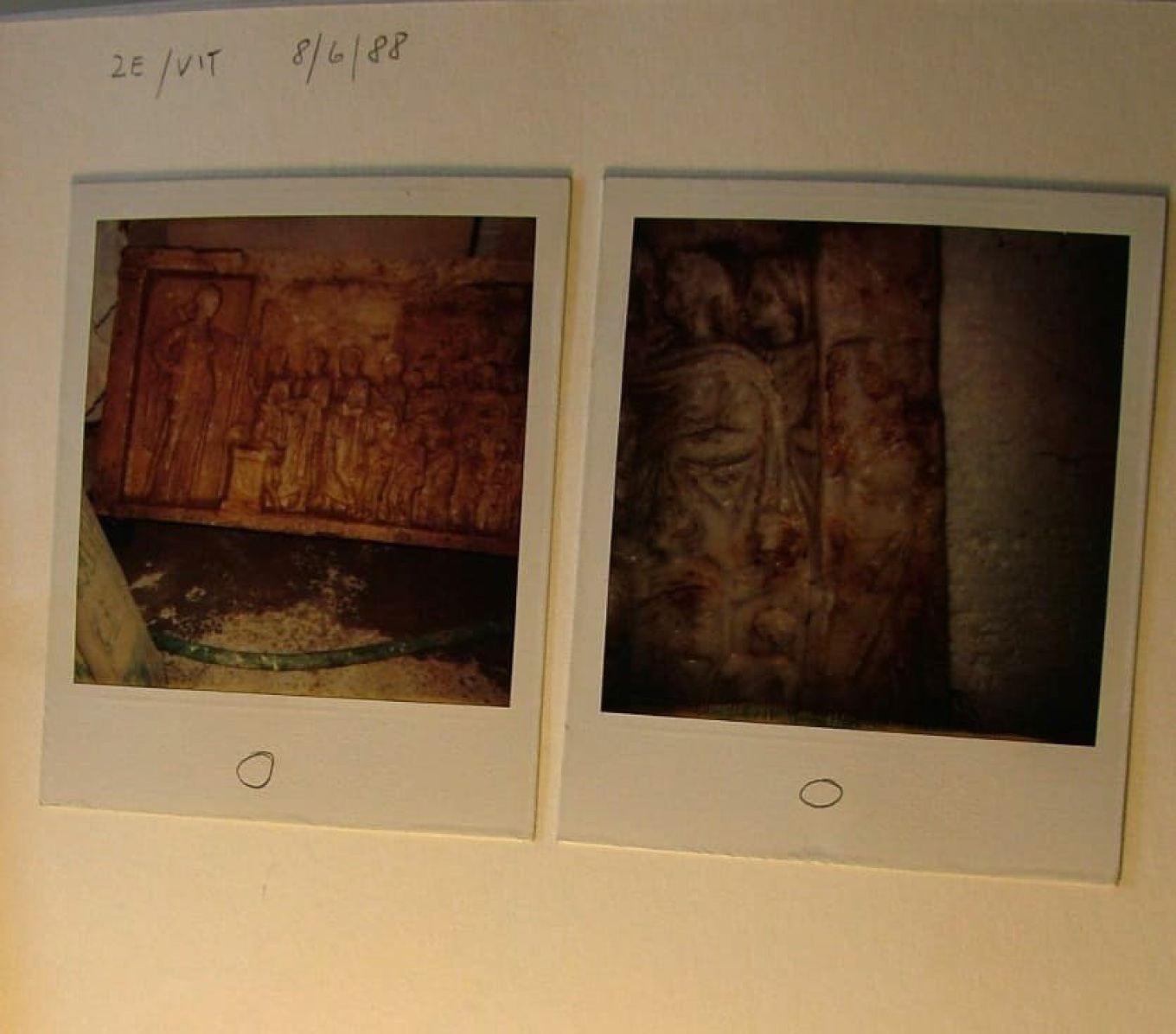
According to the Ministry of Culture’s announcement, a photograph of the votive relief is included in the archive of Gianfranco Becchina, which was seized in 2002 at his gallery in Basel following a joint operation by Italian and Swiss law enforcement authorities. Specifically, it appears in two Polaroid photographs (one showing the whole object and the other a detail). Above the Polaroids are written the date 8/6/88 and the initials of the Greek trafficker (ZE/VIT). According to the Greek judicial authorities, the specific ancient object is the product of illegal excavation and was trafficked unlawfully out of Greece.
The bronze figurines—three male and two female, approximately 6 cm high—follow the type of the worshipper with the right hand raised toward the head, a characteristic gesture of supplication to the deity.
The objects were handed over to the Archaeological Museum of Piraeus.
Ask me anything
Explore related questions