






In the coming weeks, if not days, cameras with Artificial Intelligence are expected to begin sending “tickets” to offending drivers. During this period, the temporary interconnection of the first eight AI cameras installed in Athens with the Traffic Police’s electronic system is underway, until the construction and operation of the permanent information system of the Ministry of Digital Governance is completed.
Immediately afterward, and once the tender procedures for the procurement of the cameras are completed, their installation will begin in Athens, Thessaloniki, and Crete, which will be the first regions to host them on their roads.
So far, however, based on their operation, the AI cameras that were pilot-installed at eight locations in Attica to train the system to record violations—such as exceeding the speed limit, using a mobile phone while driving, not wearing a seat belt or helmet, running a red light, driving in emergency lanes or bus lanes, and illegal parking—appear to have plenty of work.
Despite the fact that the locations where the cameras are installed and operating have been announced and even appear as safety alerts on GPS platforms such as Waze, a multitude of violations is being recorded.
In about one month of operation, only half of the cameras recorded 39,543 drivers committing serious violations (such as running red lights or scrolling on their mobile phones while driving above the speed limit) at some of the most central points of the capital, such as Syntagma Square and Syngrou Avenue.
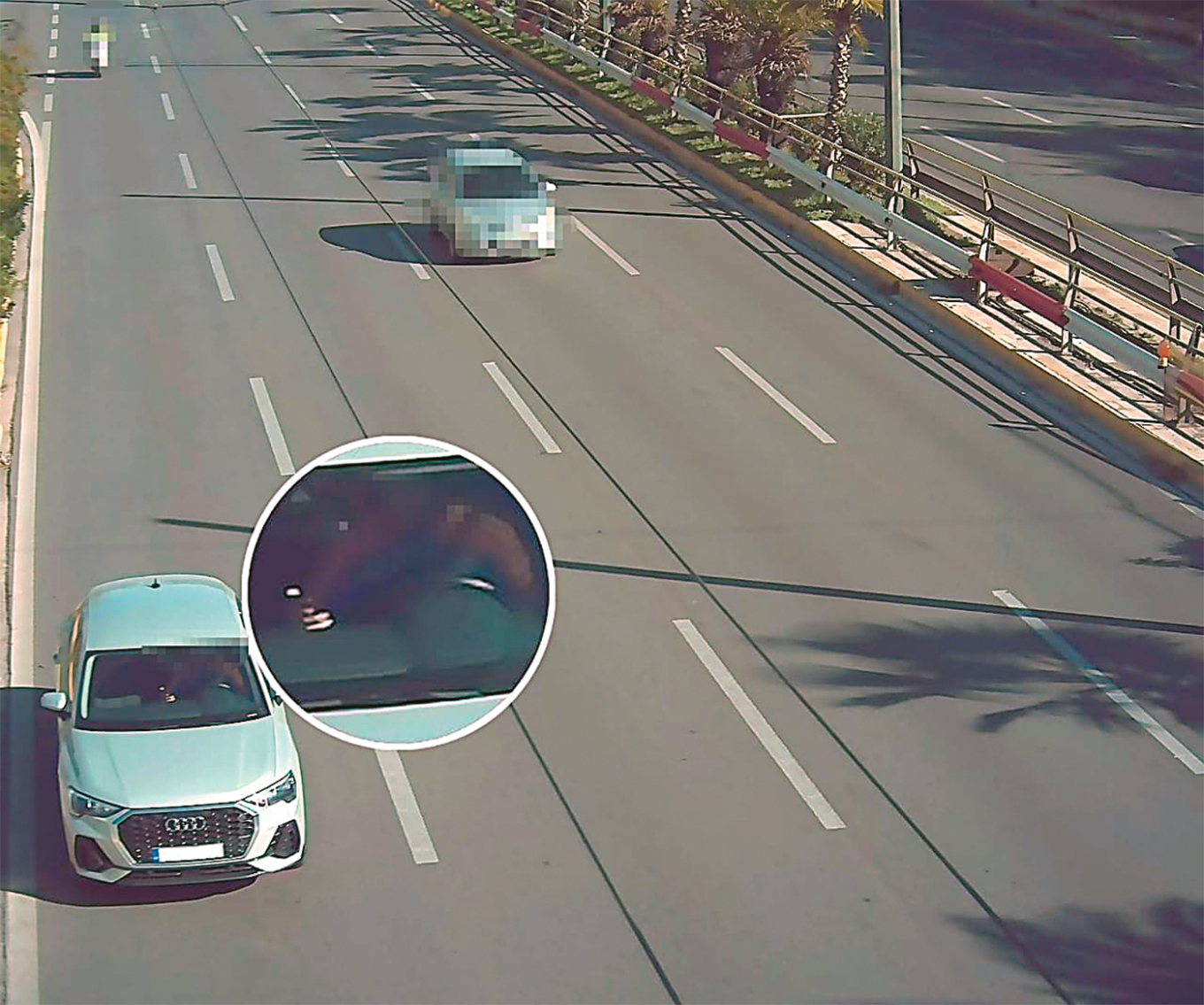
A driver was “caught” scrolling on his mobile phone
“Heavy” performance
As revealed today by THEMA, within just one month of pilot operation in Athens, the AI cameras can barely keep up with recording violations. According to data from the Ministry of Digital Governance, from December 18 (when the cameras began operating) until last Thursday, January 22:
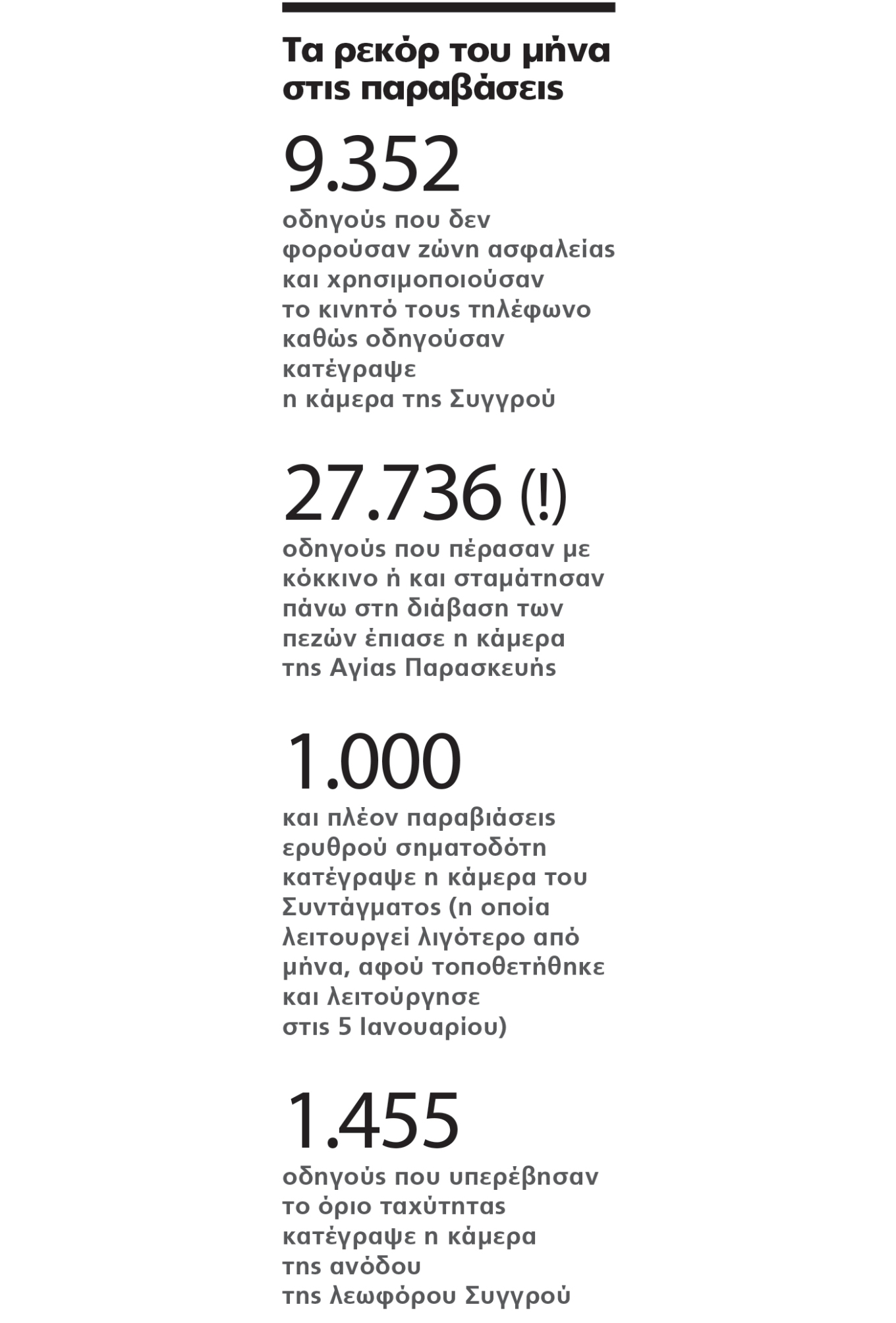
- The Syngrou camera recorded 9,352 drivers who were not wearing seat belts and were using their mobile phones while driving.
- The Agia Paraskevi camera recorded 27,736 (!) drivers who ran a red light or stopped on the pedestrian crossing.
- The Syntagma camera (which has been operating for less than a month, since it was installed and activated on January 5) recorded more than 1,000 red-light violations.
- The camera on the upward direction of Syngrou Avenue recorded 1,455 drivers who exceeded the speed limit.
These eight AI cameras (the only AI cameras currently operating in Athens) do not yet issue tickets, although this is expected to change very soon, once their interconnection with the existing Traffic Police information system is completed, which also includes other cameras such as those on the Attiki Odos.
The training of the Artificial Intelligence system embedded in these cameras of the Ministry of Digital Governance is nearly complete and, as evident from the footage revealed today by THEMA, they are now capable of detecting not only when a driver has a mobile phone to their ear, but even when it is mounted on a holder and the driver glances at it discreetly, scrolling with their finger while driving.
From the images, it is also clear how the AI camera records drivers who run red lights or stop on pedestrian crossings. It is therefore evident how easy the work will be for Traffic Police officers handling video calls for potential objections, as the conditions of the violation are so clear that the offender’s claim will be almost self-evident (e.g. “I moved forward and stopped on the crossing while the light was red to let an ambulance pass behind me”).
The automatic number plate recognition (ANPR) camera network uses AI software that detects the make, model, and color of the vehicle committing the violation. The AI system categorizes violations (e.g. red-light violation, etc.). The Ministry of Infrastructure and Transport, specifically the Road Supervision and Safety Systems Service (ODYSEAS), will manage the camera network.
We remind that the first eight AI cameras of the Attica pilot system operate at the following locations:
- Municipality of Athens: Panepistimiou Street and Vasilissis Sofias Avenue
- Municipality of Agia Paraskevi: Mesogeion Avenue and Chalandri Avenue
- Municipality of Rafina–Pikermi: Marathonos Avenue and Fleming Street
- Municipality of Kallithea: Syngrou Avenue and Agias Fotinis Street
- Municipality of Elliniko–Argyroupoli: Vouliagmenis Avenue and Tinou Street
- Municipality of Filothei–Psychiko: Kifisias Avenue and Ethnikis Antistaseos Street
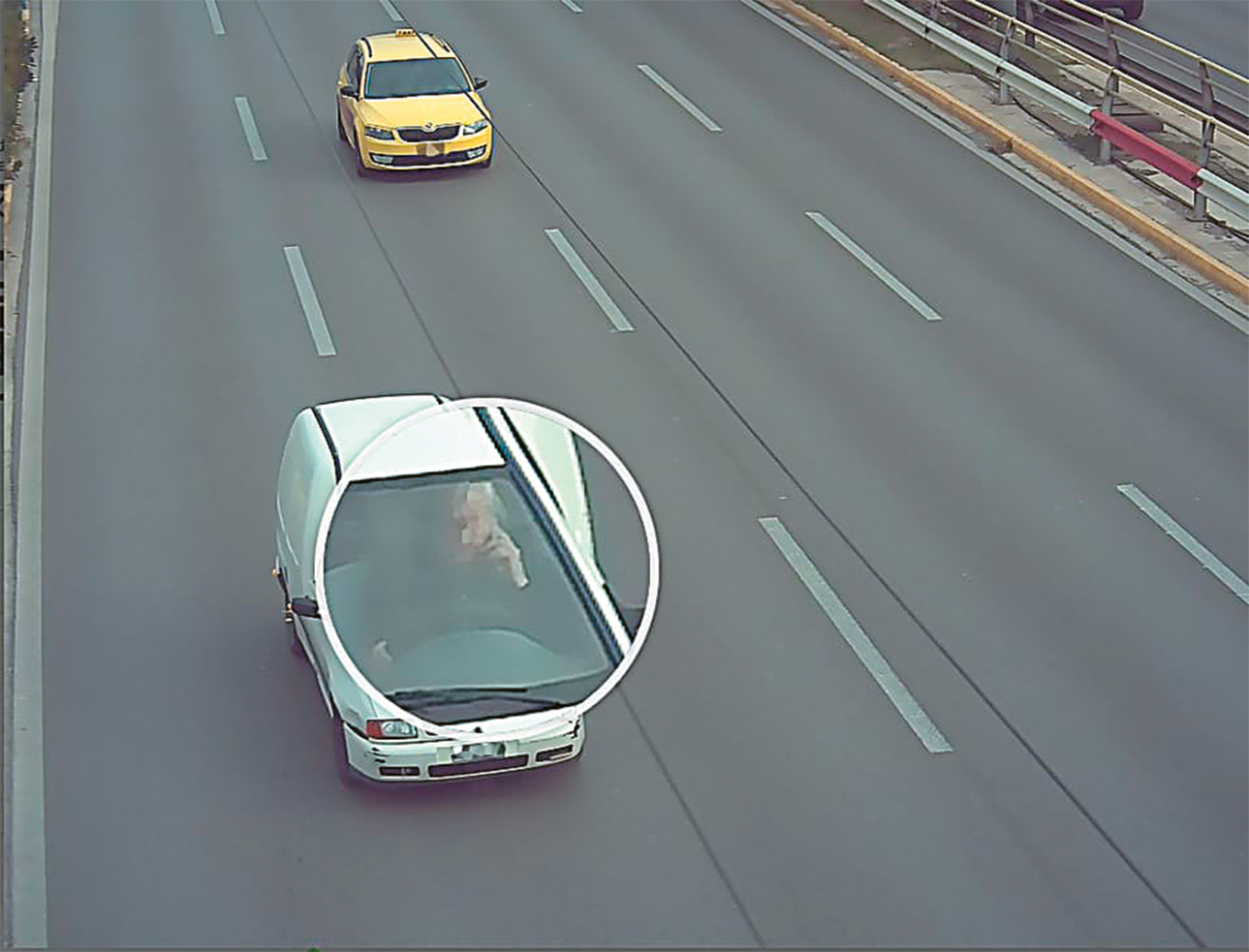
A small van driver was “caught” talking on his mobile phone on Syngrou Avenue
2,000 “eyes”
More than 2,000 AI cameras are expected to be installed during the current year (starting, barring unforeseen issues, as early as next month) in Attica, Thessaloniki, and Crete.
The expansion of the program to other parts of Greece will continue in 2027, following Traffic Police recommendations based on the most dangerous locations (i.e. where most accidents and dangerous violations occur). At the same time, municipalities and regions will be able, in cooperation with the Ministry of Transport and the Hellenic Police, to install cameras (which they will procure themselves but connect to the central system) in areas considered high-risk.
In addition, the installation of 500 cameras inside OSY buses is planned to monitor bus lanes, while the Region of Attica has already begun installing 388 new cameras.
Especially regarding OSY buses (where the organization is responsible for camera operation), since the first installed cameras are not yet connected to the Traffic Police system, violations recorded during bus routes are stored on a hard drive, which is collected by Traffic Police officers for further action.
The existing Traffic Police system will be used temporarily until the creation and operation of the modern unified information system for recording and managing traffic violations is completed. This is the Unified Electronic System (UES) for Recording and Managing Highway Code Violations and Fines, which will operate under the supervision of the Ministry of Digital Governance.

On Syngrou Avenue, a driver was talking on his mobile phone on speaker while driving
Data from all available sources are transmitted to the UES, namely:
a) from competent inspection authorities via portable devices (tablets), and
b) from optical sensors of electronic devices (cameras), which are cross-checked with the necessary public information systems.
Camera data are transmitted encrypted to the UES and include image and video files, as well as temporal and geographic metadata of recorded violations. Through appropriate interfaces and interoperability, the system enables:
- Automatic recording of violations via camera interconnection, many of which use advanced Artificial Intelligence technology.
- Electronic issuance and delivery of tickets (Violation Confirmation Act) to the citizen’s electronic mailbox on gov.gr.
- Digital submission of objections and appointments with authorities via teleconference (video call).
- Electronic payment of fines using an RF code and automatic updating of penalties and points in the Driver Behavior Control System (SESΟ).
- Immediate digital suspension of the driving license at the time of violation recording, as an accompanying administrative penalty, without physical removal of the document.
The system will be hosted on Ministry of Digital Governance infrastructure and will interoperate with necessary information systems and registries from the Ministry of Transport, such as the Driving License Archive, the Tax Registry of the Independent Authority for Public Revenue (AADE), the Citizens’ Registry of the Ministry of Interior, the National Communication Registry, and the Hellenic Police, via the Interoperability Center of the General Secretariat for Information Systems and Digital Governance.
The Ministry of Infrastructure and Transport will manage the camera network, while the independent ODYSEAS service will monitor fine collection and ensure overdue fines are forwarded to AADE after eight months.
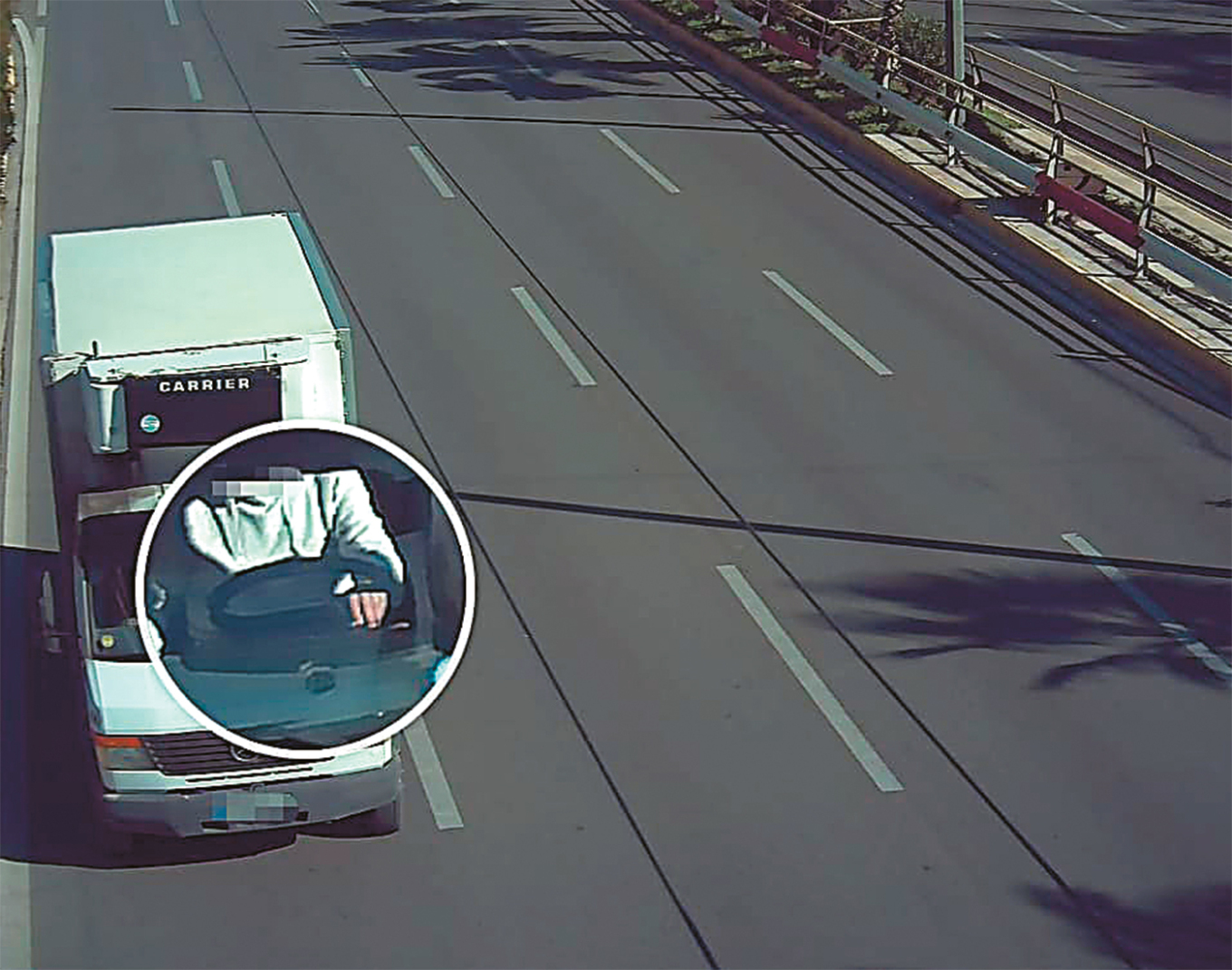
A professional truck driver was caught not wearing a seat belt
How the tickets will be delivered
How will the new system work? According to officials from the Ministry of Digital Governance, offenders will automatically receive notification that new documents are available in their gov.gr mailbox. This notification will be sent via push notification in the Gov.gr Wallet app, SMS to the offender’s mobile phone, or email to the contact details registered in the National Communication Registry.
What if someone does not have a smartphone or electronic delivery via gov.gr is not possible? In that case, if electronic service is not completed, the offender will receive the ticket in the traditional way, i.e. in writing, via notification (e.g. by mail).
The confirmed fine must be paid within eight months. If not paid on time, the debt will be sent by ODYSEAS to AADE, in accordance with the Public Revenue Collection Code, and enforcement procedures will follow.
What if the ticket is unfair or the AI system makes a mistake? In such cases, the system will support digital objections. This means the citizen can submit objections without visiting offices, but via teleconference (video call) after scheduling a digital appointment with the competent police authority.
The objection must be submitted within three days, starting from the notification of the Violation Confirmation Act in the citizen’s gov.gr mailbox. By law, after ten working days from notification, the three-day deadline begins—meaning the citizen effectively has 13 days from electronic posting.
The new system will not only digitally confirm violations and deliver tickets via gov.gr, but will also update the points system and automatically impose digital suspension of the driving license, without requiring physical confiscation.
Ask me anything
Explore related questions


