




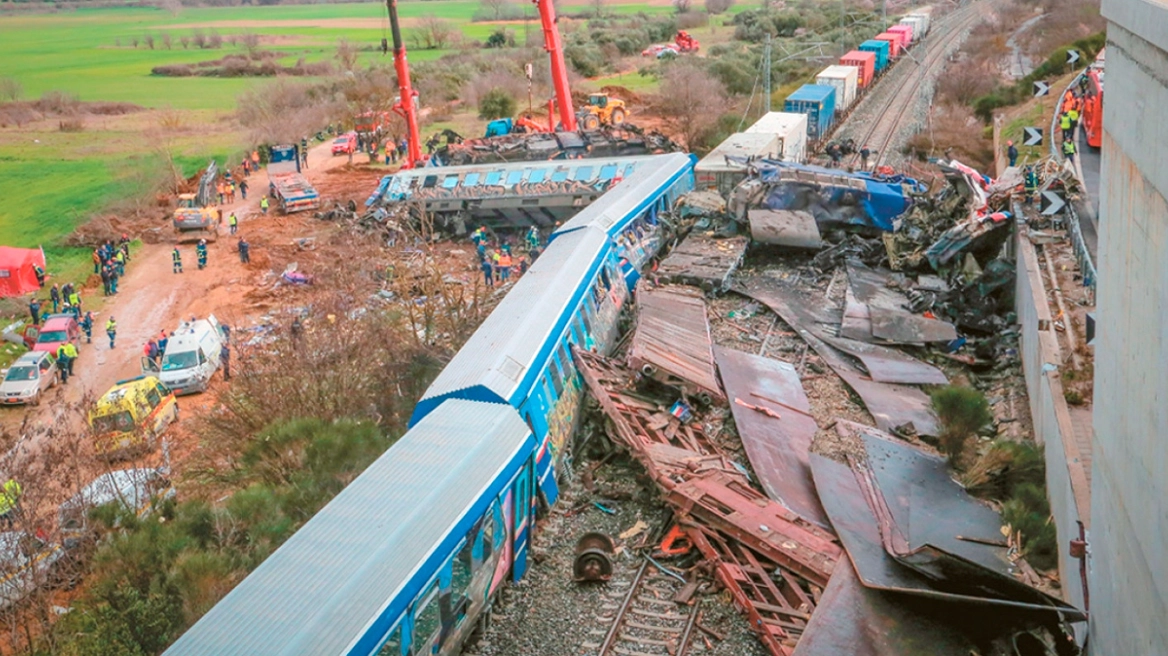
Specifically, eight relatives of victims had asked for the trial — scheduled to begin on 23 March 2026 — to be moved to Thessaloniki or Athens, citing among other reasons the presence of an international airport and easier access for lawyers, witnesses, victims’ families, and other parties involved in the proceedings.
However, the Seventh Criminal Chamber of the Supreme Court, presided over by senior Vice President Agapi Tzouliadaki, dismissed the request. The Supreme Court prosecutor, Konstantinos Tzavellas, had previously recommended that the request be rejected.
It is noted that Maria Karystianou, who had publicly questioned holding the trial in Larissa — stating that she “does not trust Larissa” — was not among the eight relatives who formally submitted the request for a change of venue.
36 Defendants to Stand Trial
On 23 March, a total of 36 defendants will appear before the court. They include:
- The station master who routed the trains onto the same track,
- Colleagues who were absent from their posts,
- Senior executives of OSE (the Hellenic Railways Organization),
- Officials from ERGΟSE,
- Members of the Railway Regulatory Authority (RAS),
- Senior executives of Hellenic Train, the company operating passenger services,
- As well as high-ranking officials and general directors from the Ministry of Transport and Infrastructure.
Most defendants face felony charges, alongside misdemeanor offenses. The number of lawyers involved in the case is expected to exceed 250, underscoring the scale and complexity of the proceedings.
Ask me anything
Explore related questions