




Greece Aegean Cyclades Tourism Development
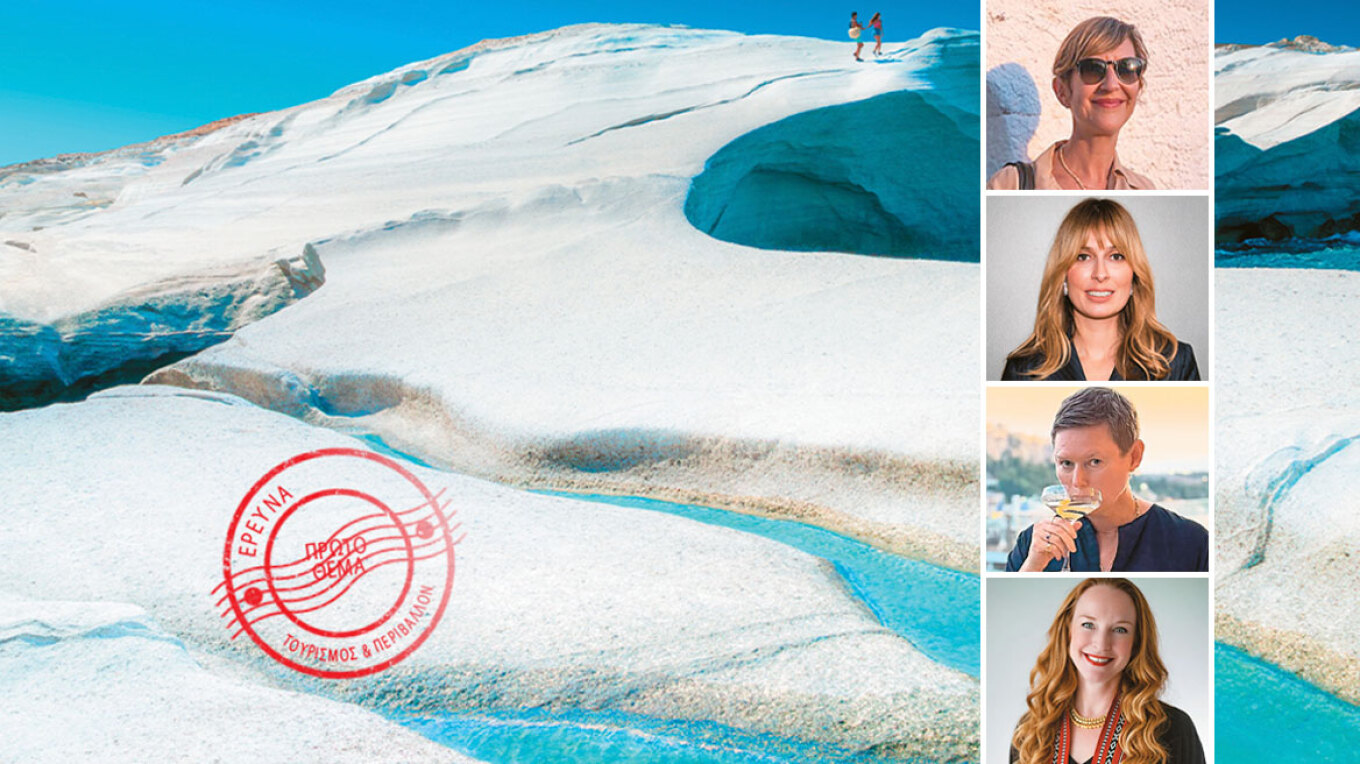
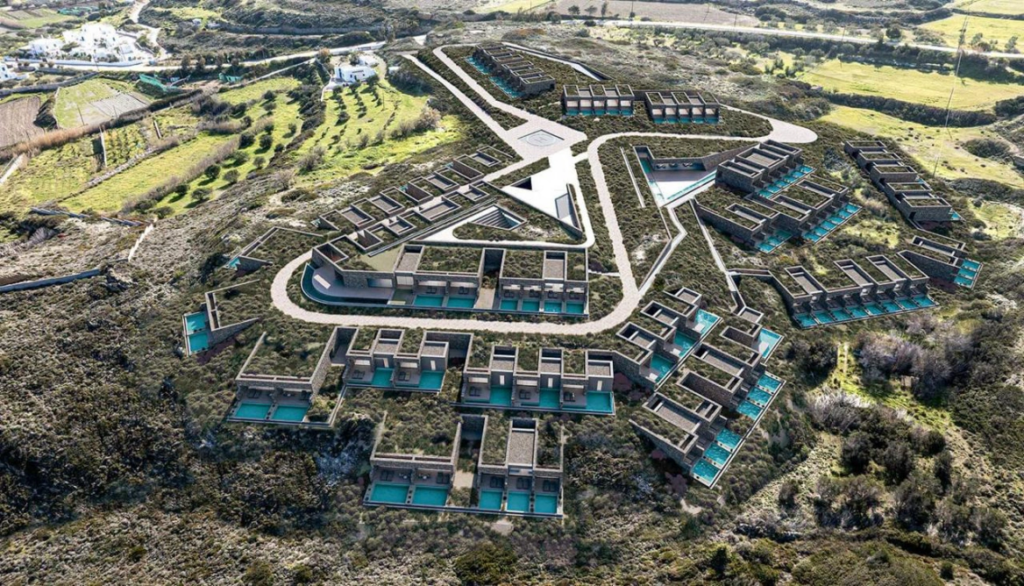
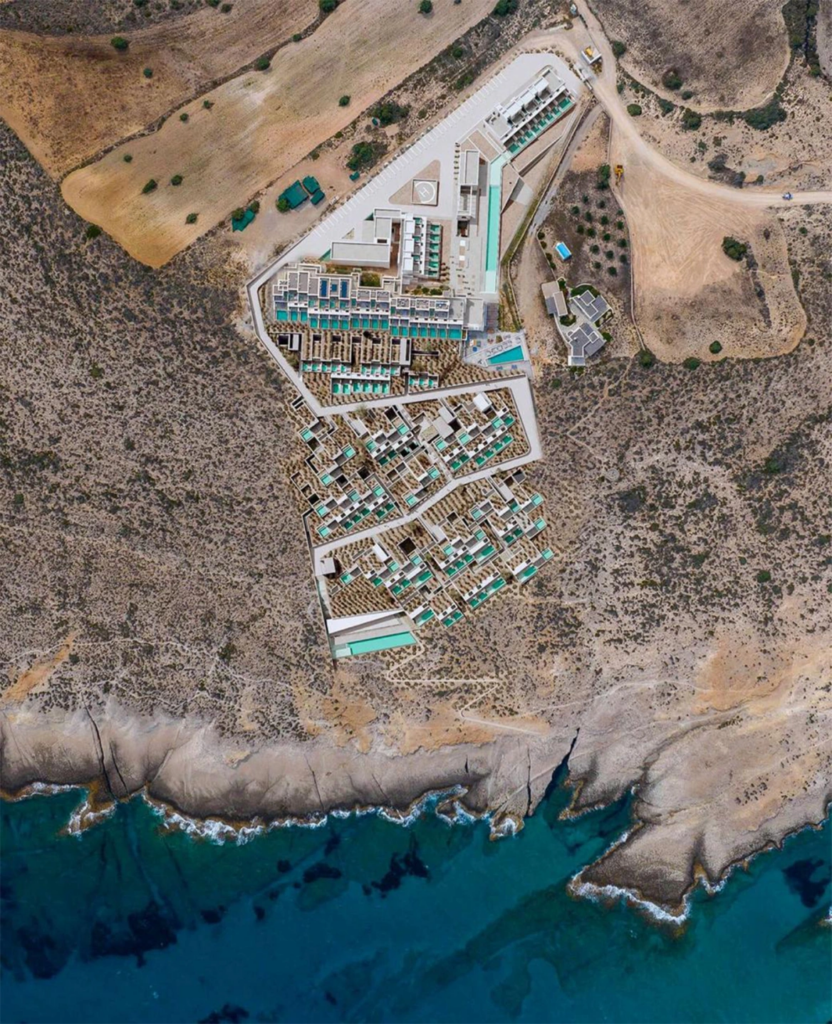
The Cyclades, the “White Coast” of Milos (after Sarakiniko), and the Aegean Sea of unchecked urban sprawl—while awaiting the Special Spatial Plans, the most beautiful natural landscapes of Greece have been destroyed for decades.
Nikos Kakavoulis, Elena Kritikou February 7, 2026, 11:07
ProtoThema opens and internationalizes the discussion on protecting the authenticity of the Cyclades’ natural landscape. Eight distinguished professionals in their fields share their personal approaches, which, though differing, ultimately compose a modern narrative on the necessity of preserving the Cycladic coastline—that rare element that enchants millions of tourists, international media, and social networks.
What Kind of Tourism Do We Want? Experts from Around the World Speak Out: “Stop Issuing Permits That Will Turn Greece into Costa del Sol”
Today, there are well-known case studies and practices that have either protected or destroyed iconic tourist landscapes on a global scale.
Against this backdrop, influential journalists from major international media (who shape major travel markets), experienced architects, and a renowned trail mapper agree that both Greece and the Cyclades in particular need a simple, clear, and transparent set of rules. These rules should firmly safeguard island urban planning and leave no room for misinterpretation or alteration of the landscape.
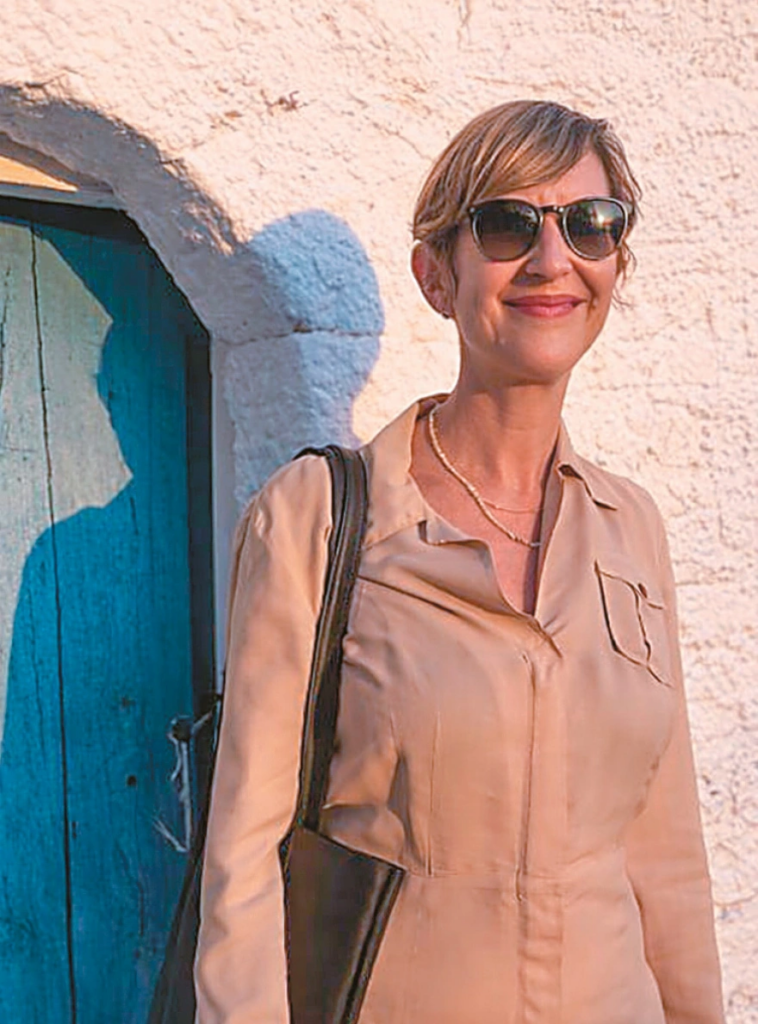
Rachel Howard
Author and Travel Editor (Condé Nast Traveller, Travel + Leisure)
“Stop issuing permits that will turn Greece into Costa del Sol”
- When you write about Greece for those who think they’ve seen it all, what is the non-negotiable promise you give them—the feeling they come for beyond the sights?
Immediacy. The spontaneous warmth of the people, the dazzling brilliance of the light, the raw beauty of the landscapes that hits you straight in the heart. The experience stripped of luxury’s frills. The joy of simple pleasures. For me, Greece is this: the incredible sense of being alive.
- When does a destination go from “teeming with life” to “unbearable”?
When cruise ships start docking in the harbor. Cruises leave no substantial, permanent benefit to destinations; they cause incalculable environmental damage and place enormous pressure on local infrastructure. A second red flag is the arrival of big hotel chains: it signals that authenticity has been packaged into a product. As an old-school journalist, I’m also wary of influencers. Social media has ruined many places in Greece, for example Sarakiniko in Milos and the Caldera in Santorini. If you want to stay authentic, you don’t want to go viral.
- Greece is grappling with a new spatial planning framework. If we translated policy into experience, what does good design look like for travelers who care about beauty, comfort, and authenticity?
The government has the wrong priorities. A truly strategic investment would mean funding resilience to the climate crisis, agricultural production, and infrastructure that supports incomes and the well-being of local communities year-round. Selling off Greece’s priceless coastline and islands to the highest bidder is neither wise nor sustainable. Coastal zones are protected by the Constitution and must remain so. The same goes for Natura areas.
Traditional professions and products dependent on proper land management are disappearing in the name of development. On Ios, for example, shepherds are forced to sell their flocks because pastures are being sold off to build kitsch resorts with fake waterfalls and heart-shaped pools. On Santorini, land is so expensive and water so scarce that soon there may be no more vineyards. From the traveler’s perspective, if you can’t visit a local cheese dairy or winery or eat fish just brought in by the fisherman, your experience will be less authentic and soulless.
- Some destinations (Milos, Spetses, etc.) have gone from well-kept secrets to global spotlights. What protects a place from becoming a copy of every other sunny seaside resort?
Local authorities and communities play a crucial role: to preserve and promote their own unique characteristics. Too often, however, they are sidelined by top-down policies that do not seriously consider local needs. Look at Sikinos: the mayor wants to ban pools, sunbeds, and large hotels, and the locals support him. Who will win?
- If you could change one thing to protect Greece’s long-term allure—one rule, one priority, one red line—what would it be and why?
I would stop issuing permits for massive resorts that risk turning Greece into a second Costa del Sol (a coastal area in Andalusia, Spain). Large hotels, often owned by international funds, strain critical resources like water and housing. At the same time, they inflate prices, making destinations inaccessible to Greeks and mid-budget travelers.
Instead, Greece could follow the example of the Balearic Islands (also in Spain), which have banned new hotels. I would only allow new units of up to 25 rooms, ban private pools, and impose stricter rules for sustainable construction and respect for architectural heritage.
- Travel media, especially those you work with, can turn a whisper into a mass trend. How do you write responsibly today, and what would you say to Greeks who fear the country may lose what made it so beloved?
I do feel torn as a travel editor in an era of overtourism and unchecked development. I try to address these issues in my writing and focus on good practices—there are many people and places in Greece offering responsible, regenerative tourism. I love Greece more than any other place in the world, so I try to use my voice to protect what made me fall in love with it.
Nicola Chilton
Travel Editor (Condé Nast Traveller, Afar, Departures, The Times)
“The magic of Greece is its unspoiled landscape”
The new Spatial Plan must be oriented toward preserving precisely that “Greekness” of Greece that makes so many—myself included—return again and again, despite countless other Mediterranean destinations. It’s a quality that’s hard to measure or describe in numbers, but that’s where the magic lies. In the small taverna by the sea. In the old café. In the little shop run by the same family for generations. In the new bar set up by a restless young couple. In those unpretentious places, not necessarily polished, but full of heart. It would be a tragedy to see such places close under pressure from more tourist-centric businesses. Because once character is lost, it’s not regained—it’s not rebuilt with design, nor bought with investment.
Perhaps it’s time for Greece to look beyond the familiar hotspots and toward places long overlooked. In Japan, for example, where top destinations like Kyoto are suffocating from overtourism, a strategy to boost regional tourism is gaining ground: to stimulate local economies, attract repeat visitors, and promote other aspects of the country beyond the stereotypical, viral images. Naoshima is an excellent example: once a polluted industrial island, today it’s one of the world’s most sought-after contemporary art destinations. Another example is the Fogo Island Inn in Newfoundland, Canada. It’s not just another luxury hotel; it’s a social enterprise, where profits are reinvested in the island’s community. It’s a brilliant model: it shows how tourism can strengthen a place-based economy by leveraging natural, human, and cultural capital, offering visitors something deeply rooted in the destination.
Vangelis Stylianidis
Architect
“Let some islands develop like Mykonos. Others, however, should become natural parks”
In the public debate on the tourist development of the Cyclades, the concept of landscape protection is often linked to a strong romanticism for the “Greek summer,” notes experienced architect Vangelis Stylianidis. He is critical of this approach, believing it obscures the real dilemmas the islands face today.
“The aesthetic is what we all see and why we protest. But behind the aesthetic are much more serious issues related to nature management.” He cites underground construction as an example: “A particularly environmentally burdensome building trend, as they are never demolished, being deep in the ground with heavily reinforced concrete. Their only advantage is that they don’t offend aesthetically, which is little consolation for the rest.”
“The discussion about the Cyclades cannot be limited to the landscape,” he says. “The issue is to help residents live decently. Areas now promoted as ‘paradises’ were until recently islands where you had to start with a donkey to get a loaf of bread.”
“We must decide: either we want tourism on the islands—because, unfortunately, as a country we can’t do much else—or the islands will become natural parks. And then we must answer who will pay for it: us, UNESCO, I don’t know who, so that they maintain, with residents inside, their character and identity. If they develop touristically, that inevitably means radical alteration of the residential environment due to scale.”
In his view, it would be preferable to have a conscious policy of differentiation: some islands to develop intensively, even with overdevelopment like Mykonos, while others to be maintained with strict restrictions, functioning as environmental parks. “I say it harshly, but for me the only solution is to build organized tourist complexes. There we can limit their number and size, and the profits from this activity should return in significant part directly to the residents, not just through taxation.”
According to Vangelis Stylianidis, the main problem is not the lack of a regulatory framework, but its implementation. “There are tools, they’re just not applied,” he says, emphasizing the need for serious Local Urban Plans and strict adherence to the rules.
Stelios Volantis
Director of Town & Country
“Protect authentic beauty, not the stereotype”
If you love Greece, you owe it to help broaden the discussion about it, to make it richer and more inclusive. And with the new Spatial Plan, to talk about its beauty and history beyond stereotypes. To do this not only theoretically, but in practice, by experiencing summers in southern Greece—not just the Cyclades or Athens—with experiences in its unknown corners and winters in the north. Greece is certainly not just a summer destination. And it’s not just blue and white. The clearer and more persistently this message is conveyed, the more visitors will hear it and the more will travel to the country at a different pace and with more sophisticated choices.
Greek tourism is indeed booming, and this is clearly a unique opportunity for visitors and locals. Now, however, is the time we all need to ensure that the same people don’t flock to the same places at the same time. It’s a difficult equation, but for those wondering where it’s really worth going, my advice is simple: there’s a simple indicator—the Greeks themselves. The alarm bells ring when they avoid a destination because it’s unbearably crowded. Fortunately, the alternatives in Greece are countless.
Stefanos Psimenos
Trail Mapper
“The landscape is the identity of every place”
For trail mapper and researcher Stefanos Psimenos, the discussion about the future of the Cyclades starts with the acknowledgment that tourism is today the main, if not the only, vehicle for economic development on these islands. However, he insists that tourist development cannot be uniform or uncritical. Each island has a unique identity, which is its real comparative advantage.
“Anafi, for example, attracts visitors because there is an undisturbed landscape without construction, no roads, many trails. Milos stands out for its unique geological landscape and impressive coastline. Such characteristics determine the choice of one destination over another,” he notes.
In this context, hiking tourism emerges as a realistic and sustainable alternative. As he explains, these visitors come in spring and autumn—extending the tourist season—and have “good budgets” and seek authentic experiences. “People who come and seek the experience will stay in a guesthouse, not a hotel, will choose local products and local flavors.”
Trails play a central role in this tourism model, but they are currently in a state of uncertainty. “A trail simply disappears because it becomes a road to build a hotel. There is no institutional framework for their protection, marking, and maintenance.” The need to create a National Trail Network is a basic prerequisite for the development of this type of tourism.
Panagiotis Tournikiotis
Professor of Architecture, NTUA
“The land of the islands is a cultural asset”
Undoubtedly, tourism has been a godsend for the Cycladic islands, says Professor of Architecture Panagiotis Tournikiotis. However, he notes that the limit has now been exceeded. “At this moment, we are heading toward a catastrophic excess. Sooner or later, tourism will be restricted because overtourism will deter visitors.” As he explains, when a destination becomes a fully standardized tourist product, when everything looks the same, when the landscape, scales, and rhythms are leveled, what made the place special is lost—its identity is lost.
“It’s one thing to go somewhere and be somewhere, and another to go somewhere for a vacation and not care where. In the end, you’re nowhere; you’re just somewhere for a vacation and it doesn’t matter where. This will be a great loss for a place and a country. If we consider that what we loved about the Aegean islands or the beautiful beaches of the Peloponnese is a pure, untouched landscape, a nature, a geological structure, capes with their rocks writing at sunset and the sea foam waving above them, we must realize that this is not the same as a large resort. We therefore need massive protection of the heritage we have, because it will remain, while the fashion of resorts may end and then we’ll be looking for ways to demolish or repurpose them.”
Panagiotis Tournikiotis locates the root of the problem in the central political choices of recent decades. As he argues, traditional settlements were protected, but not natural landscapes, while out-of-plan construction was allowed with spatial plans that “facilitated the dispersion of tourist construction throughout the natural landscape of the islands.” Faced with this reality, he proposes an “almost total cessation of construction outside designated settlements. Development should be concentrated in settlements with infrastructure and a clear plan, not spread piecemeal across the landscape. We find it hard to look far ahead. We plan as if tomorrow will always be like today. Trends change, while constructions and alterations to the landscape remain.”
He considers the responsibility of the State to be fundamental. As he says, when we talk about the land of the islands, “it’s not just private land, but also a common cultural asset.” And precisely for this reason, he concludes that “the State itself must organize strict rules,” setting limits where exploitation threatens to destroy something that belongs to everyone.
Dr. Seda Domaniç Sekmen
Travel Editor and Creator of the “Monday to Sunday Book” Guide, Former Director of Vogue Turkey
“The spirit of the Cyclades is being suffocated by overdevelopment”
Greece’s problem is not a lack of charm; it’s overconcentration. Spatial planning needs to actively support the redistribution of demand: limit development on saturated islands and, with thought and above all measure, direct a low-impact tourist industry to less prominent areas. Destinations like Zagorochoria, Tzoumerka, and Euboea have landscapes, culture, and seasonality with depth, yet remain invisible to international visitors.
The new plan must, above all, protect the spirit of the islands. On Mykonos, Santorini, and Kos, density, scale, and speed of development have undermined their appeal. When an island becomes a suffocating spectacle of large hotels, beach clubs, and short-term rentals, the experience shifts from the joy of discovery to the effort of avoidance.
Yolanda Edwards
Travel Editor and Creator of “Yolo Journal”
“Tourism will decline when the place no longer looks like Greece”
Development without due care for the place is undoubtedly a global problem. However, in Greece—where people travel precisely because it is not overdeveloped—the need for protection becomes more critical than ever. It’s not just a matter of aesthetics or values; it’s, in essence, a long-term economic equation: what happens when tourism starts to decline because the place no longer looks like Greece? The travelers everyone wants—those who spend, who care about culture, who return—don’t come here to see the same large units stacked next to each other. They come because Greece is beautiful. And history shows how easily this beauty can be undermined: many bypass Rhodes or stay only one night in transit, because the poor development of the 1980s left a permanent mark. Something similar is often heard about Kos. On the other hand, islands like Patmos and Symi show what it means to preserve your identity: their appeal, far from fading, is strengthened. On Milos, the alarm bells are ringing. When I started going there in 2015 for an article in Condé Nast Traveller, there were only a few high-end hotels and—at least in the US—it wasn’t yet a topic of discussion. Today it resembles a mini Santorini: full of Americans fighting for Instagram photos, which is why they came in the first place.
This trend-following tourism does not build loyalty to the place. It doesn’t come to return; it comes to catch the moment. And I fear that this logic, however profitable it may seem in the short term, devalues the experience, cheapens the destination, and is ultimately unsustainable. Let’s hope the Spatial Plan provides real solutions.
Ask me anything
Explore related questions