





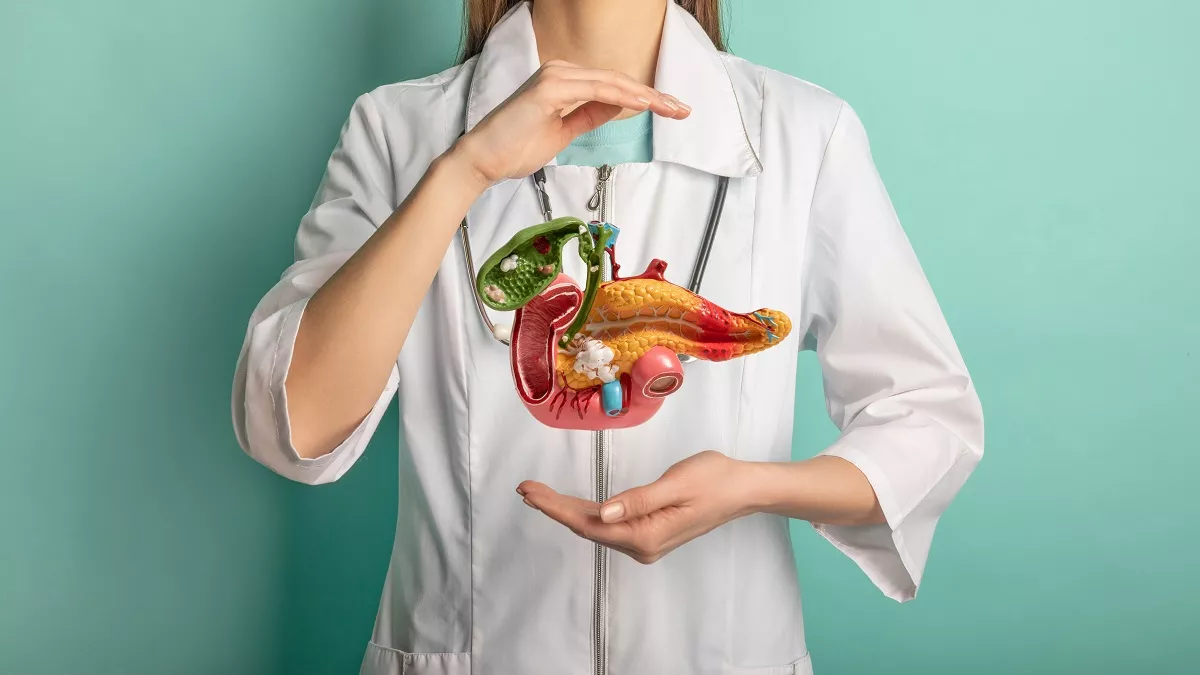
Cholelithiasis can lead to serious complications. It is therefore important to schedule surgery at the appropriate time, emphasizes Dr. Alexandros Giakoustidis, General Surgeon specializing in liver, pancreatic, and gastrointestinal surgical oncology, as well as laparoscopic and robotic surgery.
The gallbladder is a small sac located beneath the liver that serves as a storage reservoir for bile. Bile is produced by the liver, aids in digestion, and is transported through the bile ducts to the duodenum. Cholelithiasis—commonly referred to as “gallstones”—can lead to various serious complications. Proper timing of surgical intervention is crucial to prevent these potential complications, which can significantly complicate a patient’s clinical condition.
What is cholelithiasis (gallstones)?
The most common gallbladder condition is cholelithiasis, or gallstones. Many people may have gallstones without knowing it. The condition occurs frequently in women but also affects men. Other risk factors include age (with higher incidence after 40), rapid weight loss, and a diet high in fat. Symptoms may include biliary colic—abdominal pain—along with indigestion and nausea.
How is cholelithiasis diagnosed?
The most common and recommended diagnostic method is an abdominal ultrasound. In some cases, an MRI scan (MRCP) may also be required. A CT scan can detect calcified stones, which are typically older.
What are the complications of cholelithiasis?
Gallstones can lead to inflammatory complications such as cholecystitis. In such cases, antibiotics are usually administered, and gallbladder removal surgery is scheduled at a later stage—unless the inflammation is severe, in which case urgent cholecystectomy is required. Another serious complication is pancreatitis, an inflammation of the pancreas that can lead to severe clinical conditions. Stones may also migrate into the bile duct (choledocholithiasis).
How is cholelithiasis treated?
Removal of the gallbladder does not impair digestion, since bile flows directly into the duodenum and does not need to be stored. The ideal treatment for cholelithiasis is surgical removal through laparoscopic cholecystectomy. Performed under general anesthesia, the procedure involves small abdominal incisions through which a camera and surgical instruments are inserted. Intradermal suturing techniques help ensure a good cosmetic outcome with minimal visible scarring. The operation can also be performed robotically, depending on patient preference.
What are biliary sludge and gallbladder polyps?
Sometimes imaging reveals “biliary sludge” rather than clearly defined stones. If accompanied by symptoms such as abdominal pain or nausea, further investigation is required to determine whether the sludge or micro-stones are responsible, often leading to laparoscopic cholecystectomy. Gallbladder polyps also require close medical monitoring because they may develop into cancer; in such cases, surgical removal of the gallbladder is recommended according to international guidelines.
Ask me anything
Explore related questions